
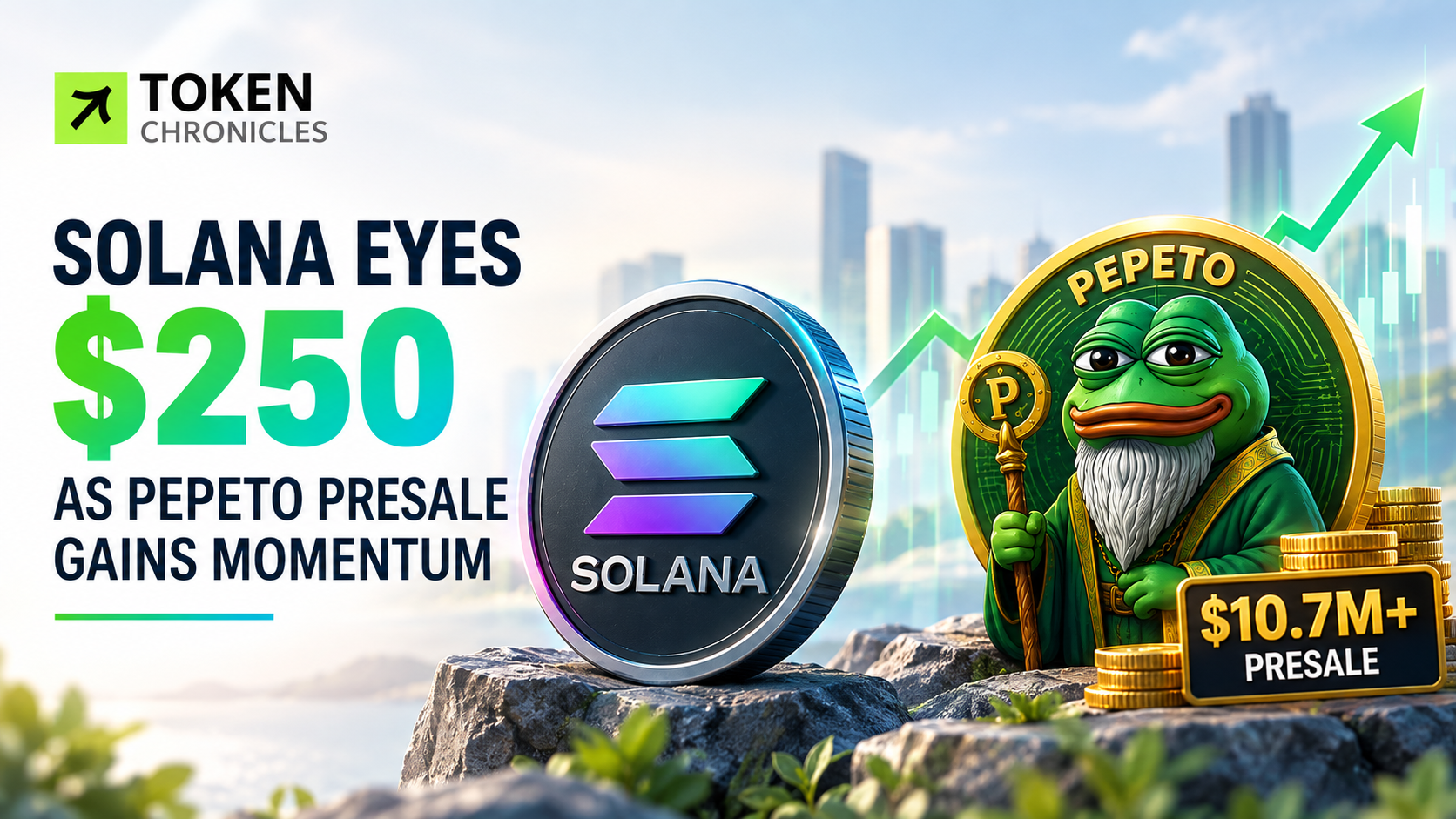
Solana’s latest network upgrade has strengthened the blockchain’s technical outlook, while analysts continue to watch whether improving infrastructure can translate into stronger demand for SOL. The Agave v4.2 mainnet upgrade went live on Aug. 17, introducing significant changes to storage costs, transaction capacity and block times.
At the same time, Standard Chartered has maintained a $250 year-end target for SOL, which would represent a substantial recovery from current levels. Meanwhile, the Pepeto token presale has reportedly surpassed $10.7 million in commitments, putting the project among the crypto presales attracting market attention.
Solana’s Agave v4.2 Upgrade Cuts Network Costs
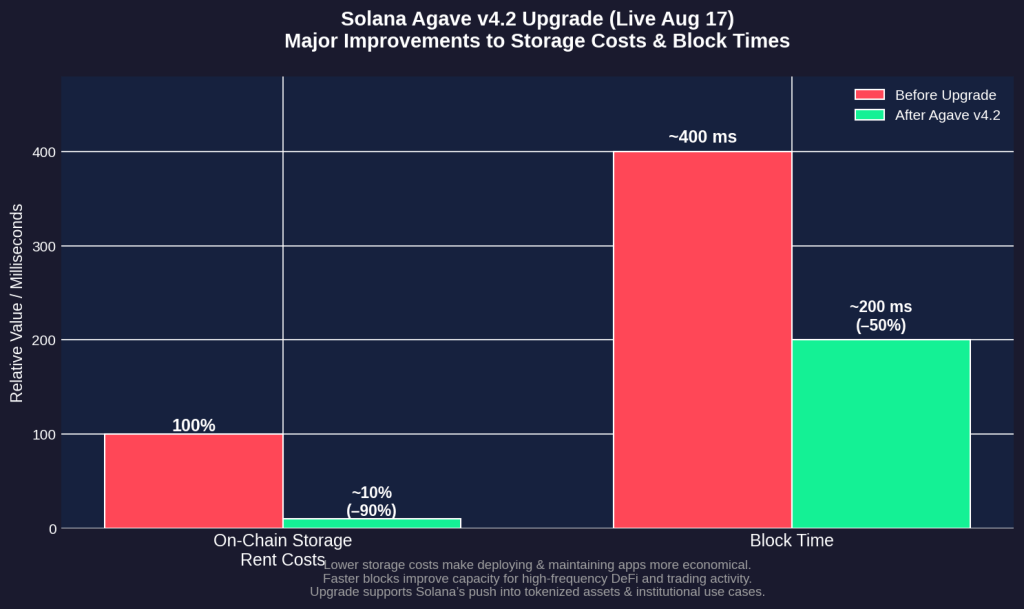
Solana’s Agave v4.2 upgrade represents a significant change to the network’s underlying economics.
The upgrade reportedly reduces on-chain storage rent costs by approximately 90%, while block times have been reduced from around 400 milliseconds to roughly 200 milliseconds.
For developers, lower storage costs could make deploying and maintaining applications on Solana more economical. Faster block production could also improve the network’s ability to handle high-frequency activity across decentralized applications and financial markets.
The changes arrive as Solana continues expanding its role in tokenized assets and institutional blockchain applications, including tokenized U.S. Treasury products.
The key question for investors, however, is whether these technological improvements will generate sustained demand for SOL.
Despite the upgrade, the token has remained under pressure, suggesting that broader market conditions continue to have a greater influence on price than network-level improvements.
SOL Remains Well Below Its Previous High
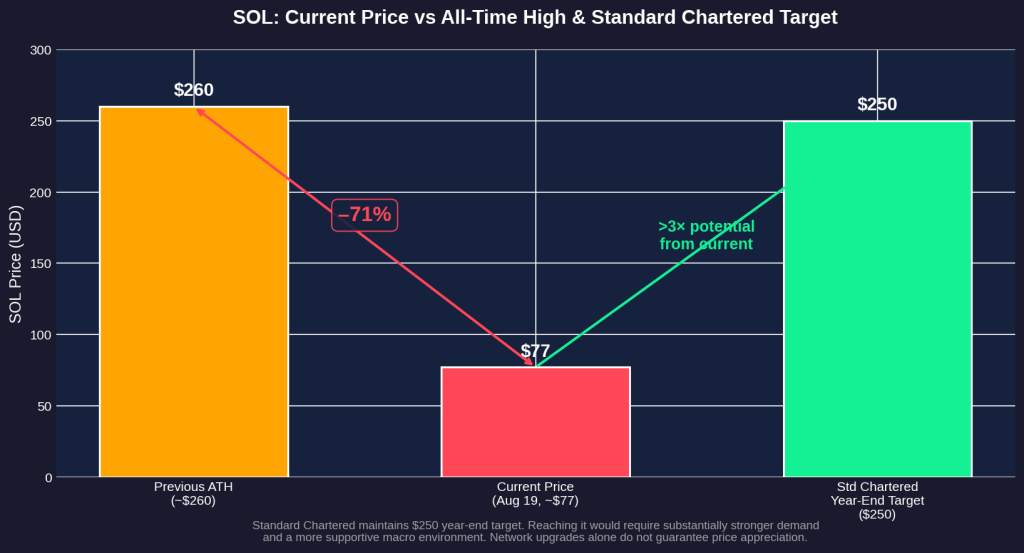
SOL was trading around $77 on Aug. 19, approximately 71% below its previous all-time high near $260.
Standard Chartered’s $250 year-end target therefore represents a potential recovery of more than three times from those levels.
Such a move would require considerably stronger market demand and a more supportive macroeconomic environment. While Solana’s technological development provides a fundamental argument for long-term adoption, it does not guarantee a corresponding increase in the token’s price.
Institutional activity around tokenized assets and continued developer adoption will remain important indicators for determining whether the network’s improving infrastructure can translate into sustained SOL demand.
Pepeto Presale Surpasses $10.7 Million
Alongside Solana’s developments, Pepeto’s presale has reportedly surpassed $10.7 million in committed capital, according to project claims.
The project is marketing a cross-chain swap system designed to facilitate token exchanges across multiple blockchain networks. It also promotes an AI-based risk-scoring feature intended to help users evaluate potential trading risks.
Pepeto has stated that its token supply is fixed at 420 trillion tokens and that the project has undergone an audit by SolidProof.
The project also claims that its development team includes the architect associated with the original Pepe project.
However, these are project-provided claims, and prospective investors should independently verify the project’s audit, tokenomics, team background and other representations before making investment decisions.
Listing Plans Could Become a Key Catalyst
Pepeto is also promoting an expected Binance listing as a potential future catalyst.
A major exchange listing can significantly increase liquidity, visibility and price discovery for a token. However, an anticipated listing should not be treated as guaranteed until it is officially confirmed by the exchange.
For presale investors, the transition from a fixed presale price to open-market trading can also introduce substantial volatility. A listing may generate buying interest, but it can equally create selling pressure from early holders seeking to realize gains.
Solana and Pepeto Represent Different Investment Profiles
The contrast between the two projects highlights two very different approaches to crypto investing.
Solana is an established blockchain network with a large developer ecosystem, substantial market capitalization and institutional adoption. Its current investment thesis is centered on network growth, technological improvements and increasing blockchain utility.
Pepeto, by contrast, remains an early-stage token project whose investment case depends heavily on successful product development, adoption, liquidity and future exchange listings.
That means the potential returns and risks are fundamentally different.
What Investors Will Be Watching
For Solana, the most important indicators in the coming months will likely include SOL demand, network activity, institutional adoption, tokenized-asset growth and broader crypto-market liquidity.
For Pepeto, investors will need to watch whether the project can convert its presale momentum into a functioning product, sustained user activity and meaningful exchange liquidity.
Solana’s Agave v4.2 upgrade demonstrates that the network continues to evolve technically. But infrastructure improvements alone cannot determine where SOL trades next.
Likewise, Pepeto’s reported presale success demonstrates investor interest, but it does not establish future token performance.
Ultimately, SOL’s path toward $250 will depend on whether stronger fundamentals meet a supportive market environment, while Pepeto’s prospects will depend on execution and whether its promised ecosystem develops beyond the presale stage.