

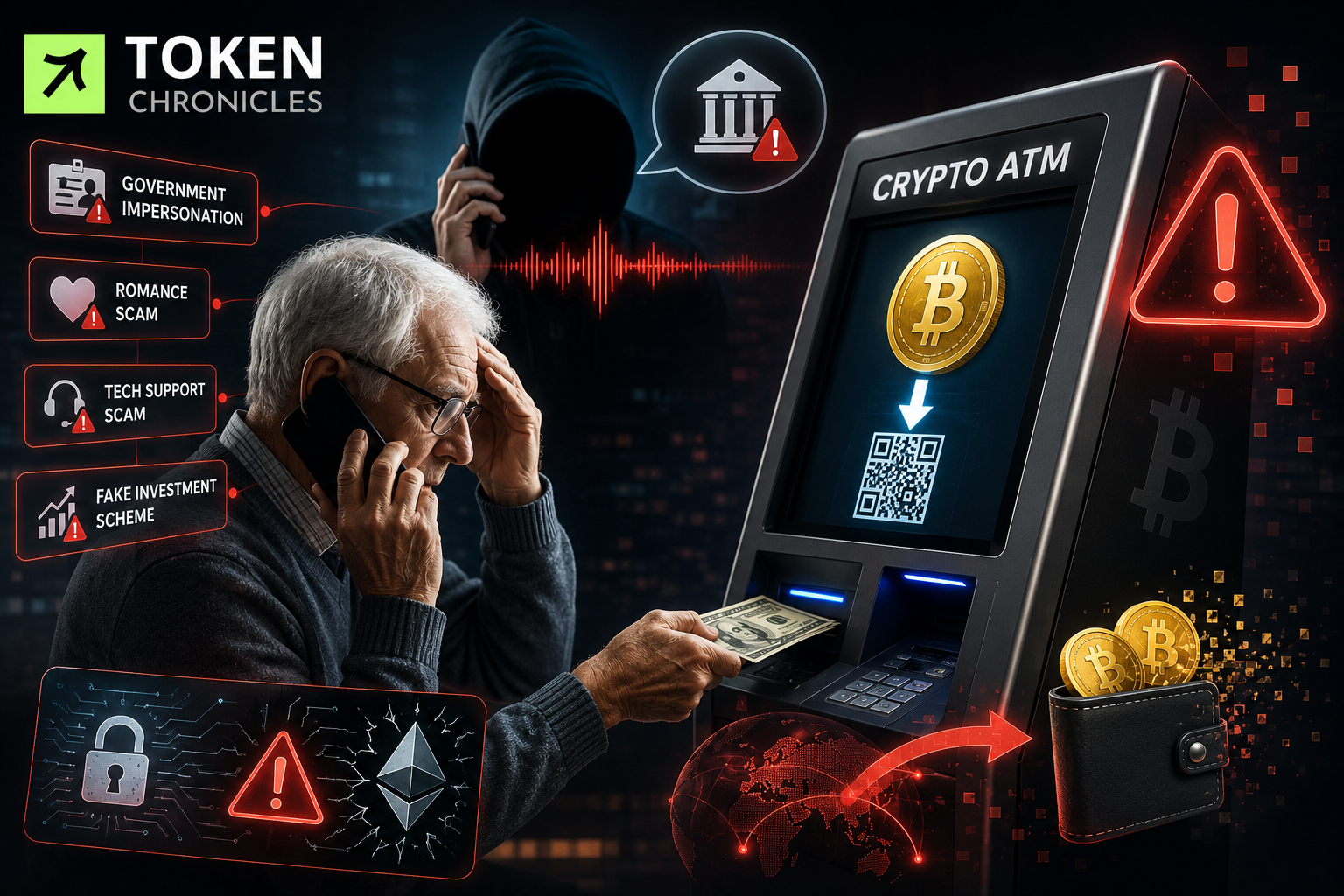
Crypto ATM scams are becoming one of the fastest-growing forms of financial fraud, with older adults suffering the largest losses. According to the FBI’s Internet Crime Complaint Center (IC3), more than 13,400 crypto ATM-related complaints were reported in 2025, resulting in over $388 million in losses, with people aged 50 and above accounting for the majority of victims.
The Scam Starts Long Before the ATM
The crypto ATM is rarely where the fraud begins—it is simply the final step in a carefully planned manipulation campaign. Scammers often spend days, weeks, or even months building trust, creating fear, or manufacturing urgency before directing victims to deposit cash into a cryptocurrency kiosk.
Common tactics include:
- Fake government investigations
- Bank security alerts
- Romance scams
- Tech support fraud
- Fake investment opportunities
By the time victims reach the ATM, they often believe they are protecting their money, helping a loved one, or making a profitable investment.
Why Older Adults Are Frequent Targets
Scammers specifically target seniors because many have access to retirement savings, pensions, investment portfolios, or home equity. Beyond finances, fraudsters exploit emotional vulnerabilities such as loneliness, trust in authority figures, and unfamiliarity with cryptocurrency technology.
According to IC3 data:
- Victims aged 60+ lost $7.7 billion to cybercrime in 2025.
- Victims aged 50–59 lost $3.7 billion.
- Crypto-related scams generated over $11 billion in losses, a 22% increase from the previous year.
- The average cybercrime loss was $20,699, but crypto-related cases averaged $62,604 per victim.
The Most Common Crypto ATM Scam Tactics
Fake Government or Law Enforcement Calls
Scammers impersonate agencies such as the FBI, IRS, DEA, or Social Security Administration. Victims are falsely told they are connected to criminal activity, identity theft, or financial investigations.
To “protect” their funds, victims are instructed to withdraw cash and deposit it into a crypto ATM using a QR code provided by the scammer.
A major red flag: Real government agencies never ask citizens to transfer money through cryptocurrency kiosks.
Romance Scams
Fraudsters build emotional relationships through dating apps, social media, or messaging platforms. After gaining trust, they introduce fake emergencies, travel expenses, medical crises, or investment opportunities.
Victims often send increasing amounts of money through crypto ATMs because they believe they are helping someone they trust.
Fake Tech Support Alerts
Victims receive alarming pop-ups or phone calls claiming their computer has been hacked, infected with malware, or compromised by cybercriminals.
Scammers posing as Microsoft, Apple, antivirus providers, or security specialists convince victims that moving money to a cryptocurrency wallet is the only way to secure their funds.
Bank Impersonation Schemes
Fraudsters pretend to be bank employees or fraud investigators and warn customers about suspicious account activity.
Victims are instructed to:
- Withdraw their savings immediately.
- Keep the matter confidential.
- Transfer funds to a “safe” crypto account.
The demand for secrecy is often the clearest sign of fraud.
Fake Crypto Investment Opportunities
Investment scams remain among the most profitable schemes targeting seniors.
Fraudsters promote:
- Guaranteed returns
- AI-powered trading platforms
- Crypto wealth-building programs
- Exclusive investment opportunities
Victims are shown fake profits on professional-looking dashboards and are encouraged to invest larger amounts. When they try to withdraw funds, they are asked to make additional payments for taxes, verification, or account activation—usually through crypto ATMs.
Why Crypto ATMs Are Attractive to Criminals
Crypto ATMs have become a preferred tool for scammers because they offer several advantages:
- Cash can be converted into cryptocurrency within minutes.
- Transactions are difficult or impossible to reverse.
- Funds can be moved across multiple wallets and countries quickly.
- Many victims do not fully understand blockchain transactions.
- The process feels less risky than handing cash directly to a stranger.
Once cryptocurrency reaches the scammer’s wallet, recovering the funds becomes extremely difficult.
The Key Takeaway
Crypto ATM scams are not technology scams—they are manipulation scams. The criminals succeed by exploiting trust, fear, urgency, loneliness, and confusion long before any money is deposited.
The most effective protection is awareness. If anyone asks you to:
- Keep a financial transaction secret,
- Withdraw large amounts of cash,
- Send money through a crypto ATM,
- Act immediately without consulting family or your bank,
it is almost certainly a scam.
In the world of crypto ATM fraud, the biggest danger isn’t the machine—it’s the deception that leads people to use it.