

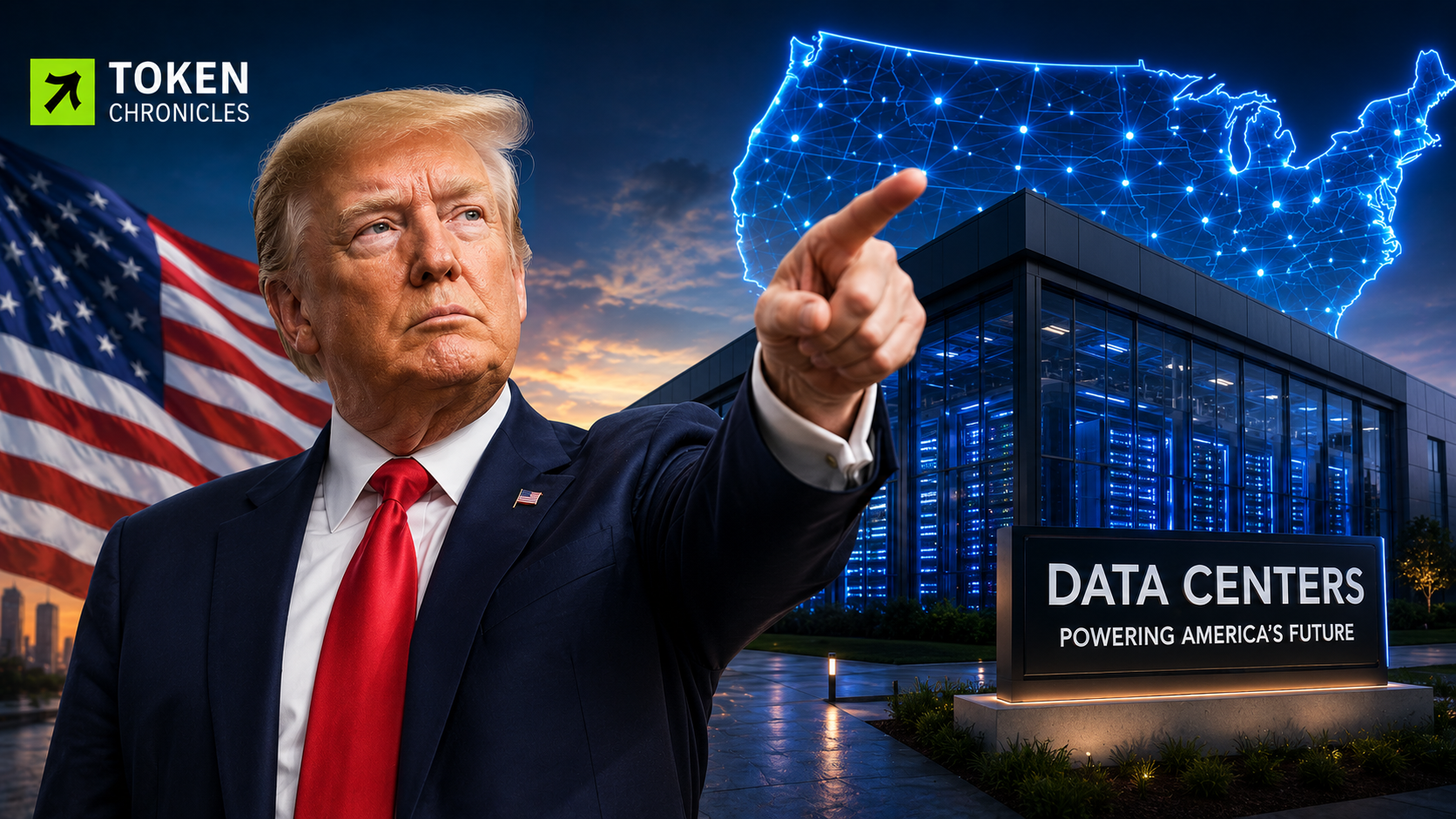
President Donald Trump has criticized growing opposition to data center development across the United States, arguing that communities should embrace the facilities because of their potential to generate jobs, attract investment, and strengthen local economies. He also warned that excessive resistance could push data center projects toward other regions, benefiting competing countries such as China.
Trump Warns Communities Against Rejecting Data Centers
President Trump has stepped up his defense of data center expansion in the United States amid increasing debate over the economic and infrastructure impact of large-scale computing facilities.
In a statement, Trump argued that communities should view data centers as an opportunity for economic growth rather than a threat.
He suggested that welcoming new facilities could bring investment, employment opportunities, and potentially lower taxes to communities that host them.
Trump also warned that local opposition could encourage companies to establish their facilities elsewhere.
Data Centers Become a Growing Economic Battleground
The debate comes as demand for data center capacity continues to increase, driven in large part by the rapid expansion of artificial intelligence and cloud computing.
Modern AI systems require enormous amounts of computing power, creating demand for specialized facilities equipped with advanced servers, extensive power supplies, cooling infrastructure, and high-speed connectivity.
For communities, these projects can represent significant investments and potential employment opportunities. At the same time, opposition can emerge around issues such as electricity consumption, water usage, land requirements, construction, and the broader impact on local infrastructure.
Trump’s comments emphasize the economic benefits while dismissing what he described as an increasingly anti-data-center movement.
Trump Says Companies Have Other Options
Trump cautioned that communities rejecting data center projects should not assume that companies will continue pursuing the same locations.
His argument is that data center developers have alternatives, including regions that are actively competing to attract large technology investments.
He characterized the industry’s economic contribution as a valuable opportunity and warned that rejecting projects could ultimately leave communities responsible for losing potential investment and jobs.
China Factor Enters the Debate
Trump also connected the domestic controversy to the broader competition between the United States and China in artificial intelligence and technology.
He argued that opposition to data center development could ultimately benefit China by slowing America’s ability to expand the infrastructure required to support AI and other advanced technologies.
The comments reflect the growing strategic importance of computing infrastructure. As nations compete to develop AI capabilities, access to reliable electricity, high-performance computing, and large-scale data centers has become an increasingly important economic and national-security consideration.
Balancing Growth With Local Concerns
Trump’s position highlights the growing tension between economic development and community concerns surrounding data center expansion.
Supporters view new facilities as a way to attract capital, create jobs, expand the technology sector, and strengthen America’s AI infrastructure.
Critics, meanwhile, have raised questions about the strain that large facilities can place on electricity grids, water resources, land, and local communities.
The debate is likely to intensify as AI adoption accelerates and technology companies require increasingly large amounts of computing capacity.
Trump’s message is clear: he wants the United States to prioritize data center expansion and sees widespread opposition as a potential economic and strategic disadvantage. The challenge for policymakers will be balancing that push for AI infrastructure with the environmental, energy, and community concerns surrounding its rapid growth.