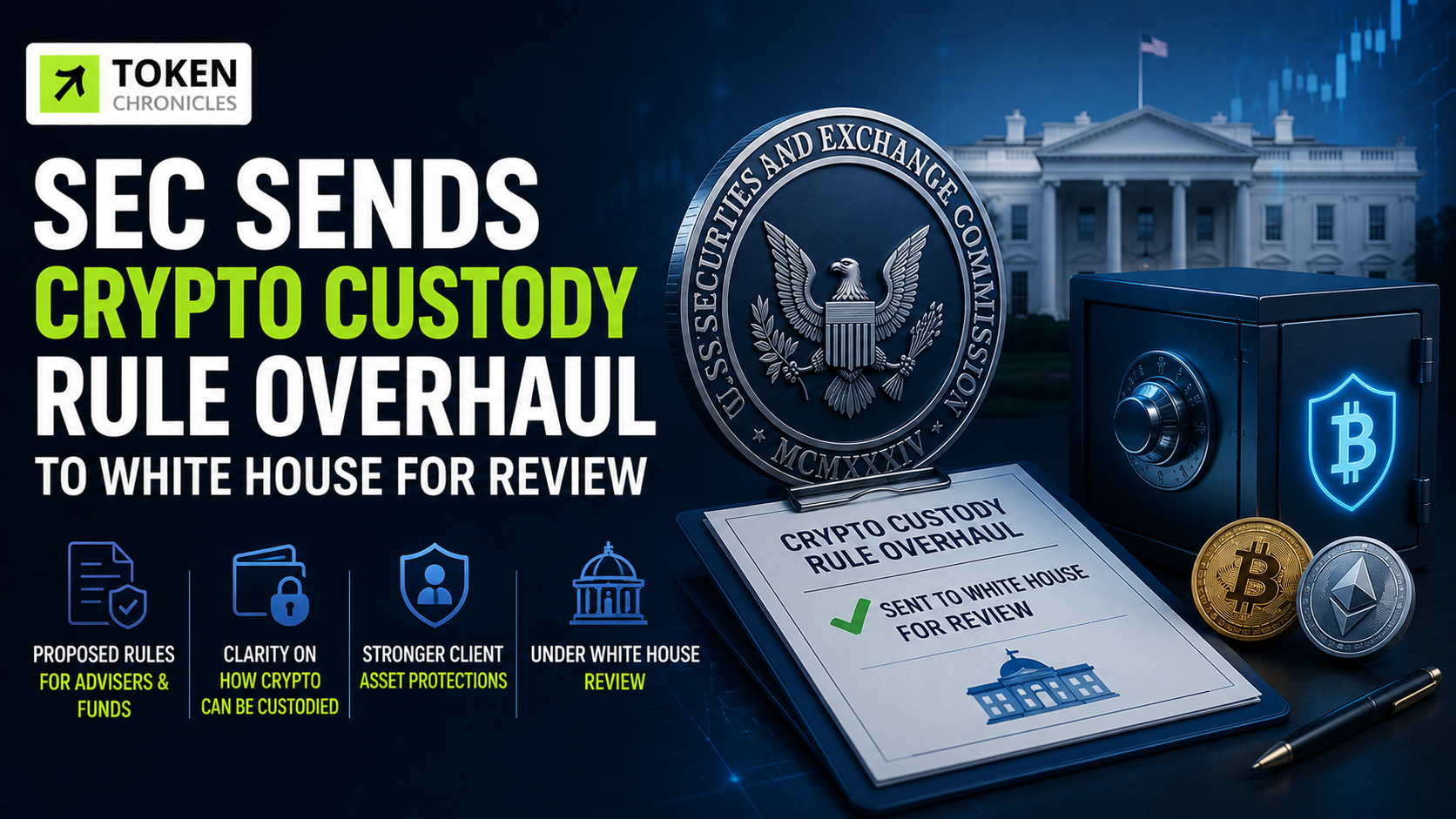

The SEC’s proposed framework for crypto assets could give US-based blockchain projects a clearer path to raising capital through public token offerings. However, the rules are unlikely to recreate the speculative frenzy that defined the 2017 ICO boom.
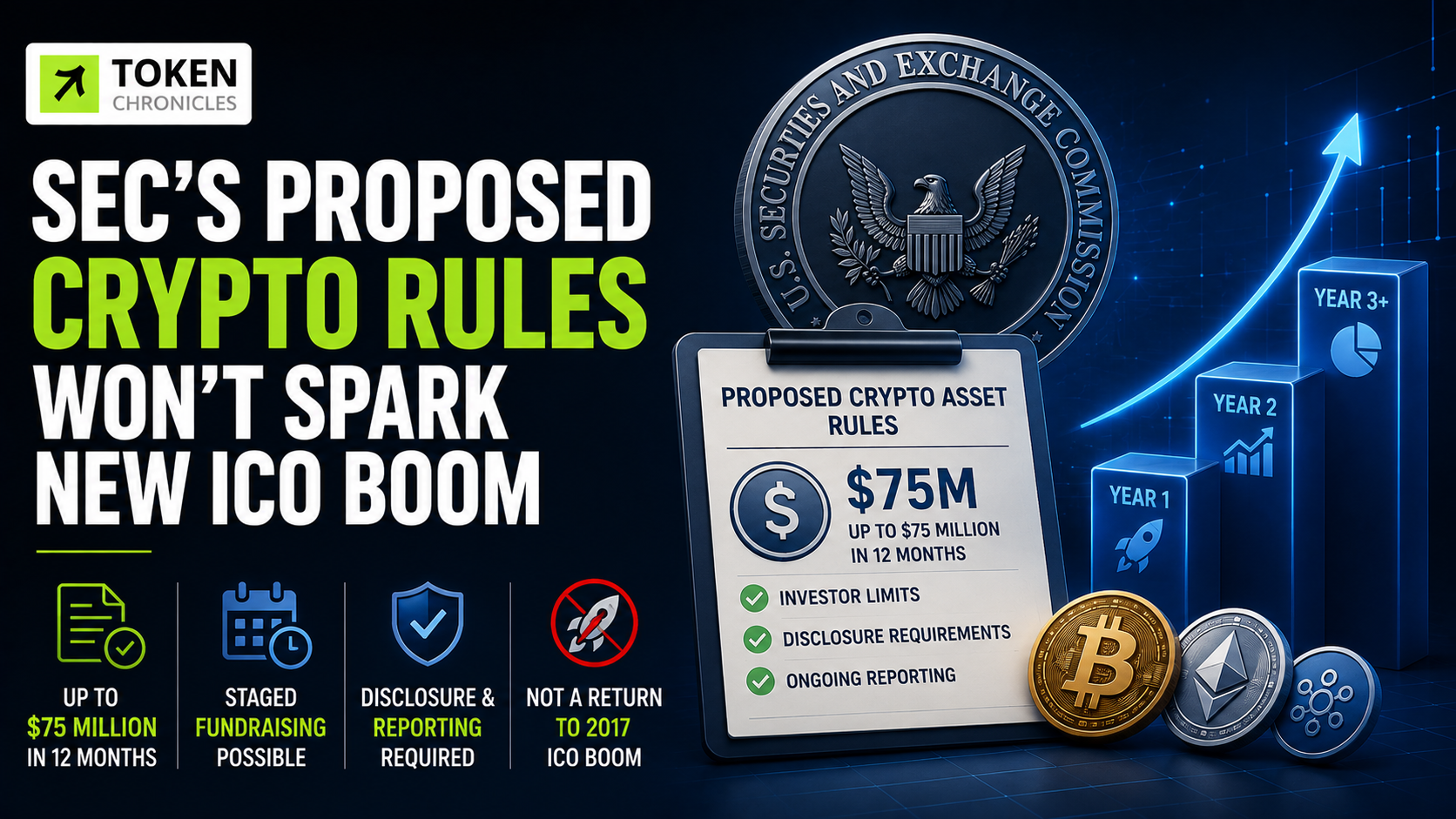
The proposal would establish new exemptions for certain crypto-related investment contracts, including a larger pathway that could allow eligible issuers to raise up to $75 million within a 12-month period. If finalized, the framework could make it easier for startups to raise capital in stages as their networks develop.
That could make early token allocations more appealing to investors. But regulatory requirements, investor limits, disclosure obligations and the painful history of previous ICOs are likely to prevent a repeat of the free-for-all seen nearly a decade ago.
A potential new framework for token fundraising
The SEC unveiled its proposed crypto regulatory framework on Aug. 18, outlining two potential exemptions for qualifying crypto-asset investment contracts.
One pathway would allow smaller issuers to raise as much as $5 million over a four-year period. A second, considerably larger exemption would permit offerings of up to $75 million during a rolling 12-month period, subject to additional disclosure and reporting requirements.
The larger exemption is particularly significant because its annual structure could theoretically allow a project to conduct multiple offerings over time.
Legal experts have suggested that an issuer could potentially return to the market after 12 months and raise additional capital, provided each transaction qualifies as a separate offering and satisfies the SEC’s requirements.
That creates the possibility of a staged fundraising model.
A blockchain project might initially raise capital to develop its network, return to the market after achieving certain milestones and potentially raise additional funds at a higher valuation.
However, the process would not simply reset every year.
Each subsequent offering would require new regulatory filings, and issuers would remain subject to continuing reporting obligations. They would also need to disclose previous fundraising activity so regulators can determine whether the applicable limits have been respected.
Could the $75 million limit create early-stage FOMO?
A capped fundraising model could introduce an element of scarcity into token sales.
If investors believe a project has a realistic chance of becoming more valuable, knowing that an initial offering is limited could increase demand for tokens available during that round.
The dynamic is not unique to crypto. Traditional companies frequently limit the amount of equity available during individual fundraising rounds or public offerings.
The difference is that crypto markets can create much faster liquidity once tokens begin trading.
That combination — limited initial supply, expectations of future fundraising and potentially rapid secondary-market trading — could encourage speculative behavior.
However, the proposed framework would also restrict how much certain retail investors could purchase. Non-accredited investors would reportedly face an investment limit tied to a percentage of their income or net worth.
That makes a repeat of the unrestricted retail participation seen during the ICO boom considerably less likely.
Why 2017 is unlikely to come back
The original ICO era was fueled by a combination of cheap capital, rapidly rising cryptocurrency prices, limited regulatory clarity and enormous retail enthusiasm.
Thousands of projects raised money with relatively little operating history. Some eventually delivered successful products, but many failed to develop viable networks or sustainable economic models.
The experience also left investors with significant losses and regulators with a much more cautious view of token fundraising.
Today’s market is fundamentally different.
Investors are more familiar with token economics, vesting schedules, insider allocations, liquidity risks and the difference between technological promises and functioning products.
Projects also face a more sophisticated infrastructure around custody, exchanges, compliance and institutional investment.
The SEC’s own estimates suggest that the proposed exemptions would result in a relatively limited number of offerings each year rather than an explosion of thousands of simultaneous token sales.
In other words, the framework could create a regulated pipeline for token fundraising rather than another speculative gold rush.
The biggest benefit may be regulatory clarity
For legitimate blockchain businesses, the most important change may not be the $75 million fundraising ceiling itself.
It could be the creation of a clearer legal route for issuing tokens in the United States.
For years, crypto companies have faced uncertainty over whether a token sale constitutes an offering of securities. That uncertainty has contributed to disputes between projects and regulators and has encouraged some businesses to limit US participation or move operations overseas.
A defined exemption could give qualifying projects a more predictable way to raise money while providing regulators with disclosure and investor-protection requirements.
That could encourage more companies to build and launch blockchain networks in the US rather than treating American markets as a regulatory risk.
But the exemption would not eliminate securities-law concerns altogether.
The secondary market could create a new legal problem
One of the more complicated aspects of the proposal concerns what happens after a token is initially sold.
A crypto asset could potentially remain connected to an investment contract after its initial issuance if buyers continue to rely on representations or commitments made by the issuer.
That creates an important distinction between the token itself and the promises surrounding it.
For example, if a project continues telling investors that the token’s value depends on the development work of its management team, secondary-market transactions could potentially raise securities-law questions.
This creates uncertainty for exchanges and other trading venues.
A token that initially qualifies for an exemption could potentially create additional regulatory complications if the relationship between the issuer, the asset and investors changes over time.
The security-versus-non-security boundary remains difficult
The proposal may therefore provide a clearer fundraising route without completely eliminating the central question that has complicated crypto regulation for years:
When does a crypto asset stop being an investment contract and become an independent digital asset?
That distinction matters because the regulatory treatment of the token can change depending on the economic relationship between the issuer and investors.
There is also a risk that companies could technically comply with the formal requirements of an exemption while continuing to market tokens in ways that encourage investors to expect profits primarily from the issuer’s future efforts.
That could recreate some of the investor-protection concerns associated with earlier token offerings.
Disclosure could become more important than hype
If the framework becomes law, successful token issuers may increasingly compete on transparency rather than simply marketing narratives.
Investors could have greater access to information about:
- Token supply and distribution
- Insider holdings
- Vesting schedules
- Fundraising history
- Use of proceeds
- Network development
- Governance structures
- Financial condition
- Material risks
That could help distinguish projects building genuine infrastructure from those primarily attempting to capitalize on speculative demand.
It would also give investors more information with which to compare different token offerings.
A more mature version of token fundraising
The SEC proposal could ultimately represent a significant shift for the US crypto industry, even if it does not produce another ICO boom.
Its biggest impact could be the normalization of structured, recurring and regulated token fundraising.
Instead of raising hundreds of millions of dollars upfront based largely on a future vision, projects could potentially raise smaller amounts, develop their networks, demonstrate progress and return to the market as they reach additional milestones.
That model would align fundraising more closely with traditional venture financing while retaining some of the liquidity and accessibility associated with blockchain-based assets.
However, the framework still leaves substantial questions around secondary-market trading, token classification, investor protection and the continuing role of issuer efforts.
The bottom line
The proposed rules could make it easier to launch and finance legitimate crypto networks in the US, but they are unlikely to recreate the 2017 ICO frenzy.
The next generation of token offerings will probably be more regulated, more transparent and more closely tied to measurable development milestones.
The bigger challenge will be ensuring that a regulatory exemption does not become a way for projects to bypass the underlying investor-protection principles that securities laws are designed to enforce.
If finalized, the rules could mark the beginning of a new era for US token fundraising not ICO 2.0, but a more structured capital-market model for blockchain projects.