
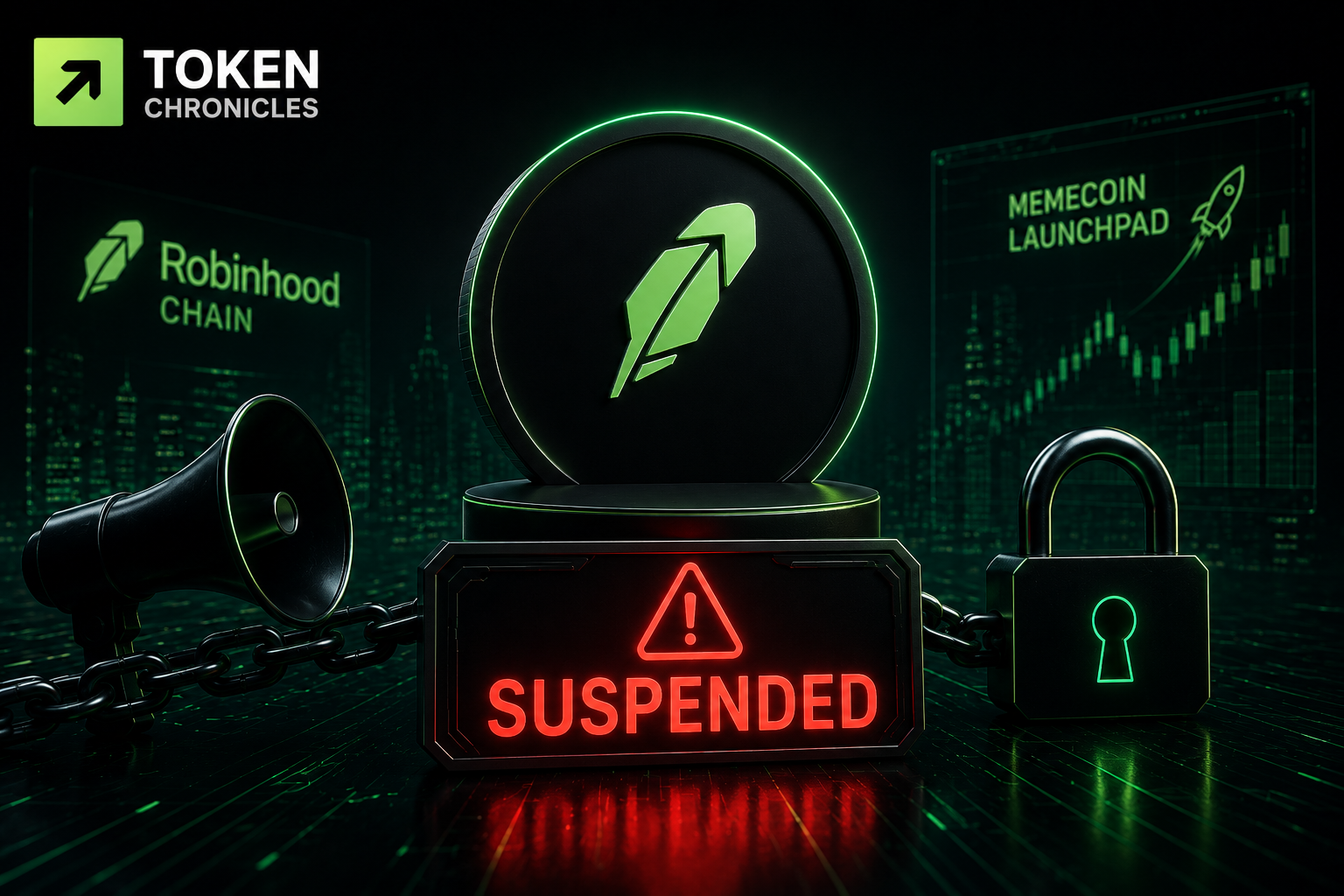
Vlad.fun, a memecoin launchpad built on Robinhood Chain, has temporarily suspended its platform after uncovering what it described as a “serious internal integrity issue” involving members of its own team.
The project announced that it has taken the platform offline while conducting an internal investigation and consulting legal counsel to determine potential legal action against those responsible. However, the team has not disclosed the nature of the alleged misconduct or identified the individuals involved.
Platform taken offline pending investigation
In a statement released on Wednesday, Vlad.fun said suspending operations was necessary to protect users and preserve the integrity of the investigation.
The team emphasized that the platform will remain unavailable until it fully understands what occurred and determines the appropriate course of action.
At this stage, there is no indication that user funds have been compromised, though the project has yet to provide detailed information regarding the scope or impact of the incident.
Fake Vlad.fun token sparks confusion
The suspension came only hours after Vlad.fun warned users about an unauthorized token circulating on its own launchpad.
According to the project, a token using the “Vlad.fun” name had appeared on the platform’s leaderboard despite having no official connection to the team.
Because Vlad.fun operates as a permissionless token launchpad, anyone can create and deploy tokens, making it possible for impersonation tokens to emerge without approval from the platform.
The team urged users to verify token authenticity carefully before trading but did not confirm whether the fake token incident was connected to the internal integrity investigation.
Memecoins quickly dominate Robinhood chain
The incident comes during the early growth phase of Robinhood Chain, the Ethereum Layer-2 network launched by Robinhood on July 1.
Built using Arbitrum technology, Robinhood Chain was introduced to support tokenized stocks, real-world assets (RWAs), stablecoins, and broader onchain financial services.
However, despite its institutional ambitions, memecoin trading rapidly became one of the network’s most active use cases. Market observers, including Galaxy Digital, have noted that speculative token launches quickly overtook many of the chain’s intended financial applications.
Growing risks for permissionless launchpads
The Vlad.fun incident highlights the operational and reputational challenges facing permissionless token launch platforms.
While permissionless systems encourage innovation by allowing anyone to create digital assets without approval, they also make it easier for malicious actors to launch impersonation tokens, scams, and misleading projects that can confuse investors.
The addition of an internal governance issue further underscores the importance of strong security controls, transparent oversight, and operational integrity as new blockchain ecosystems attempt to attract users.
Investigation continues
Vlad.fun has not provided a timeline for restoring the platform or releasing additional details about the investigation.
Until further information becomes available, users are being advised to remain cautious of unofficial tokens claiming association with the project and to await verified updates from Vlad.fun’s official communication channels.
The outcome of the investigation could prove significant not only for Vlad.fun but also for Robinhood Chain, which is still in the early stages of establishing itself as a new Layer-2 ecosystem competing for developers, traders, and onchain liquidity.