
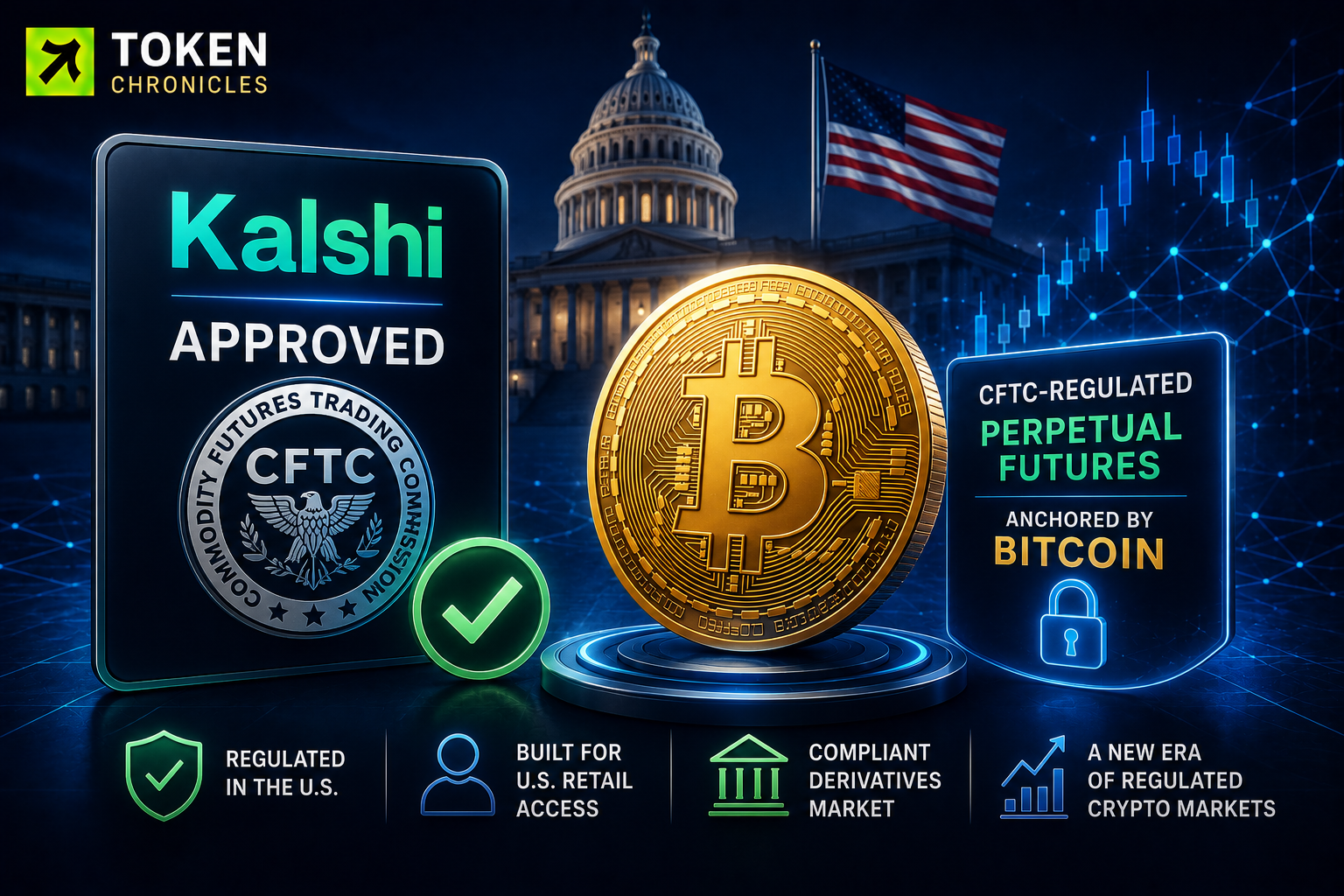
Kalshi has reached a significant regulatory milestone after receiving approval from the U.S. Commodity Futures Trading Commission (CFTC) to launch Bitcoin-linked perpetual futures contracts. The move marks one of the first efforts to bring a product that has traditionally been dominated by offshore crypto exchanges into a regulated U.S. framework.
The approval reflects the continued evolution of America’s digital asset market as regulators gradually create pathways for compliant crypto derivatives while maintaining investor protections.
A New Chapter for U.S. Crypto Derivatives
Perpetual futures are among the most actively traded products in global cryptocurrency markets. Unlike traditional futures contracts, perpetual futures do not have an expiration date, allowing traders to maintain positions indefinitely while settlements occur through periodic funding mechanisms.
Until now, these products have largely been offered by offshore exchanges operating outside U.S. regulatory oversight.
Kalshi’s approval introduces a regulated alternative, giving eligible market participants access to perpetual-style crypto derivatives under the supervision of the CFTC.
Bitcoin Remains the Foundation
The newly approved contracts will be anchored to Bitcoin, the world’s largest cryptocurrency and the benchmark asset for the broader digital asset market.
Bitcoin continues to serve as the primary gateway for institutional participation, making it the logical starting point for regulated perpetual futures products.
By building around Bitcoin, Kalshi aims to offer exposure to the crypto market through an established regulatory framework while providing greater transparency than many offshore platforms.
A Milestone for Regulatory Progress
Industry observers view the approval as another indication that U.S. regulators are gradually expanding the range of compliant crypto financial products.
Rather than representing a shift toward deregulation, the decision demonstrates an effort to integrate digital assets into existing financial market structures under established rules governing derivatives trading.
For the broader crypto industry, it signals continued regulatory engagement instead of outright resistance to innovation.
Competition with Offshore Platforms
Global crypto trading volume has long been dominated by exchanges offering perpetual futures outside the United States.
A regulated domestic alternative could attract institutional firms, professional traders, and market participants seeking stronger regulatory oversight, standardized compliance, and greater legal certainty.
Although offshore exchanges are likely to remain significant players, regulated offerings may gradually increase their share of institutional trading activity as demand for compliant products continues to grow.
What Investors Should Watch
While regulatory approval is an important milestone, market adoption will ultimately determine the product’s long-term success.
Analysts will be watching several key developments following the launch:
- Institutional participation and trading volumes.
- Market liquidity and pricing efficiency.
- Additional regulatory approvals for similar products.
- Whether other exchanges pursue comparable offerings.
These factors will help determine whether regulated perpetual futures become a meaningful segment of the U.S. crypto derivatives market.
Why It Matters
The approval of Bitcoin-linked perpetual futures represents another step in the maturation of digital asset markets.
As institutional participation increases and regulators continue building compliant frameworks, crypto trading infrastructure is gradually becoming more aligned with traditional financial markets.
While perpetual futures remain complex financial instruments that carry significant risk and are not suitable for every investor, their arrival within a regulated U.S. environment highlights the continued integration of cryptocurrencies into mainstream financial infrastructure.
If adoption gains momentum, Kalshi’s launch could serve as an important milestone in expanding regulated access to digital asset derivatives while reinforcing the growing role of Bitcoin within the global financial system.