
The Group of Seven (G7) nations have intensified their stance against North Korea’s growing involvement in cryptocurrency-related cybercrime, describing digital asset theft as a significant threat to international security and regional stability.
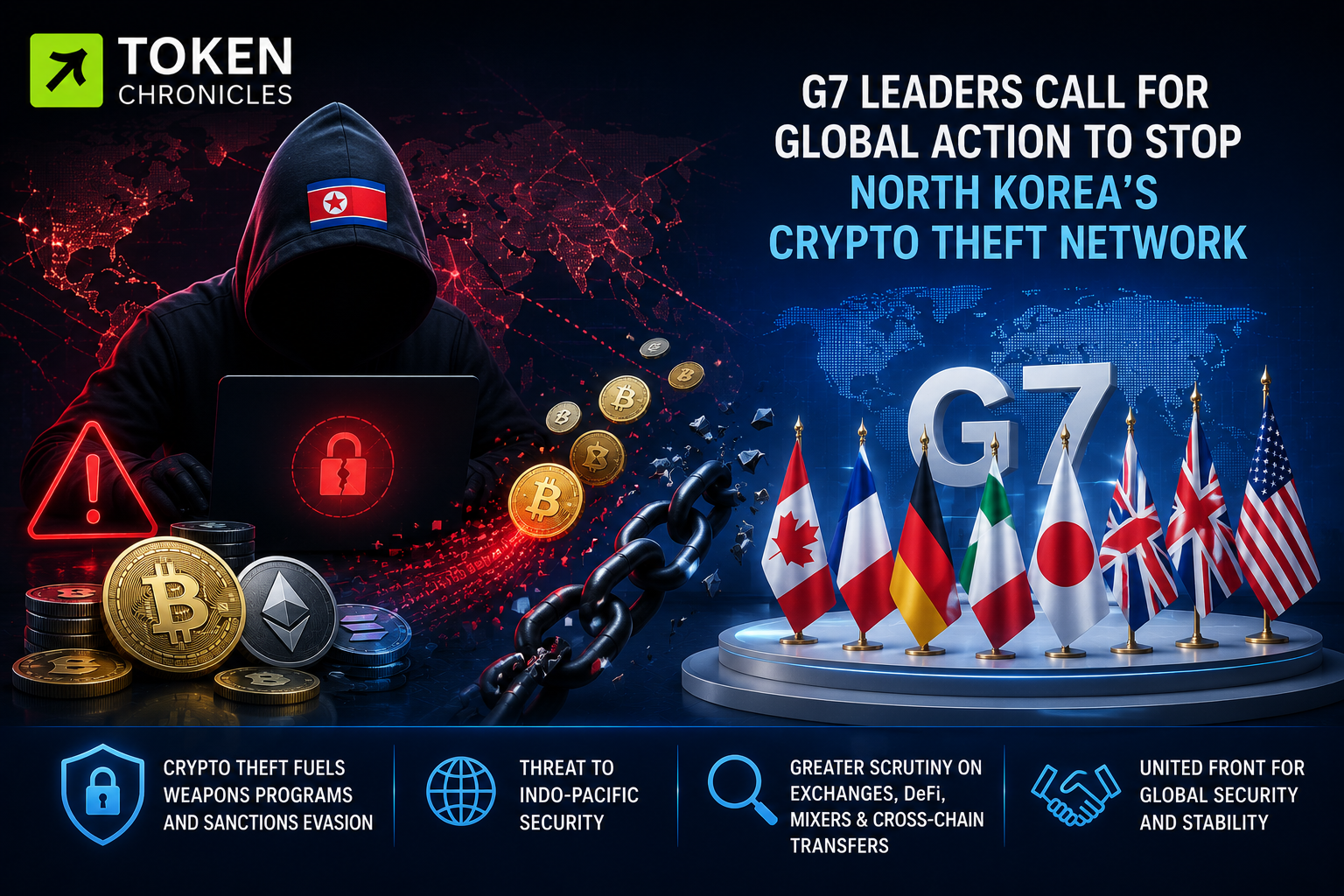
In a joint statement released following the 2026 G7 Summit in France, leaders from the United States, Canada, the United Kingdom, France, Germany, Italy, and Japan called for closer cooperation to combat North Korea’s cyber operations and illicit cryptocurrency activities.
Crypto Theft Now a Global Security Issue
The G7 emphasized that cryptocurrency theft is no longer viewed solely as a financial crime. Instead, governments increasingly see stolen digital assets as a potential source of funding for North Korea’s nuclear weapons and ballistic missile programs.
The leaders reiterated the need for coordinated international efforts to disrupt cybercriminal networks, prevent money laundering, and strengthen oversight across the digital asset ecosystem.
Focus on Exchanges, DeFi and Cross-Chain Transfers
Authorities are expected to increase scrutiny of:
- Cryptocurrency exchanges
- Decentralized finance (DeFi) platforms
- Crypto mixers and privacy tools
- Cross-chain bridges and token transfers
Investigators have previously linked North Korean hacking groups, including the infamous Lazarus Group, to some of the largest cryptocurrency thefts in history. These groups have allegedly stolen billions of dollars from exchanges and blockchain protocols while using sophisticated laundering techniques to obscure the movement of funds.
A Broader Geopolitical Concern
The warning formed part of a wider discussion on security challenges in the Indo-Pacific region.
Alongside concerns over cybercrime, the G7 reiterated its commitment to addressing North Korea’s nuclear ambitions, strengthening regional security, and maintaining stability in global financial and energy markets.
Why It Matters
The latest statement signals that cryptocurrency regulation and cybersecurity are becoming increasingly intertwined with global geopolitics.
As governments intensify efforts to combat illicit crypto activity, the industry could face tighter compliance requirements, increased monitoring, and stronger international cooperation aimed at preventing digital assets from being used to finance illegal activities.
For the crypto market, the message from the G7 is clear: security, transparency, and global coordination are becoming central pillars of the industry’s future.