
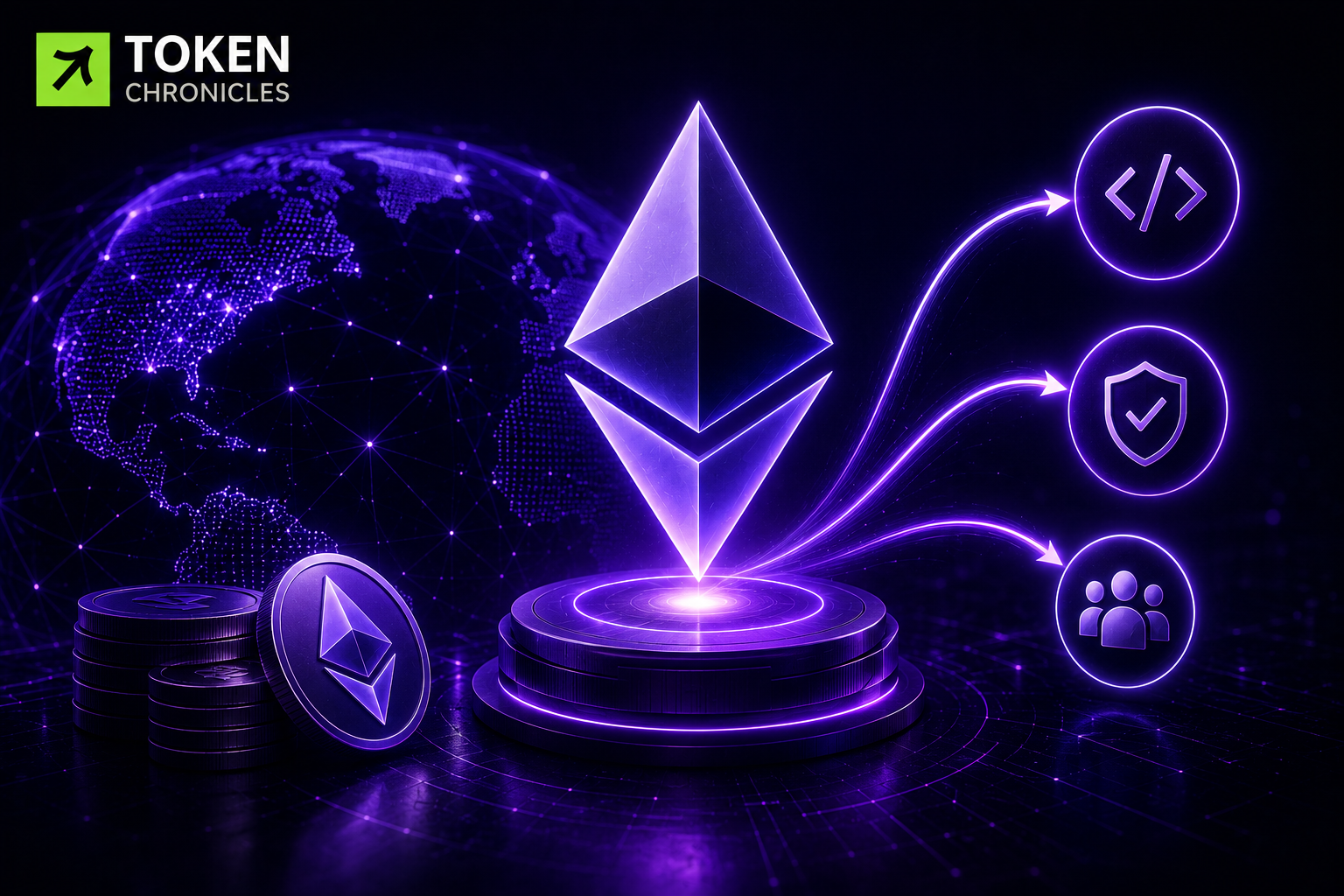
A new Ethereum proposal is exploring a mechanism that would allow validators to redirect a portion of their staking rewards to support developers, security projects, research teams, and public infrastructure across the Ethereum ecosystem.
Under the proposal, validators could allocate 0% to 10% of their staking income toward ecosystem funding. If a majority of validators support a contribution rate above zero, the redirection could become mandatory for all participants.
Supporting Ethereum’s Public Goods
The proposal aims to address what developers call Ethereum’s “free-rider problem.”
Many projects rely on shared tools, research, and open-source infrastructure but contribute little financially to maintaining them. Redirecting a small percentage of staking rewards could create a sustainable funding model for:
- Developer teams
- Security initiatives
- Research organizations
- Open-source infrastructure
- Public goods across the Ethereum ecosystem
Billions in Value at Stake
Based on current staking activity, Ethereum validators collectively earn around 700,000 ETH annually.
If between 5% and 10% of rewards were redirected, the proposal estimates that approximately:
- 50,000–70,000 ETH per year
- Equivalent to roughly $120 million annually
could be allocated to ecosystem development.
Concerns Over Governance
Despite the potential benefits, the proposal has sparked debate.
Critics argue that staking operators—such as exchanges and liquid staking providers—might end up deciding where funds are allocated instead of the underlying ETH holders.
Others warn that large validator groups could coordinate voting power and influence funding decisions in ways that may not benefit the broader community.
A Response to Ethereum’s Funding Challenges
The proposal arrives at a time when Ethereum’s long-term development funding has become an increasingly important topic.
Recent discussions within the community have highlighted concerns about maintaining stable financial support for core developers and essential infrastructure as traditional funding sources evolve.
What Happens Next?
The idea remains in the research stage and has not yet become an official Ethereum Improvement Proposal (EIP).
However, it has already sparked an important conversation about how Ethereum should fund its future—and whether staking rewards could become a sustainable engine for supporting the network’s ongoing growth and innovation.