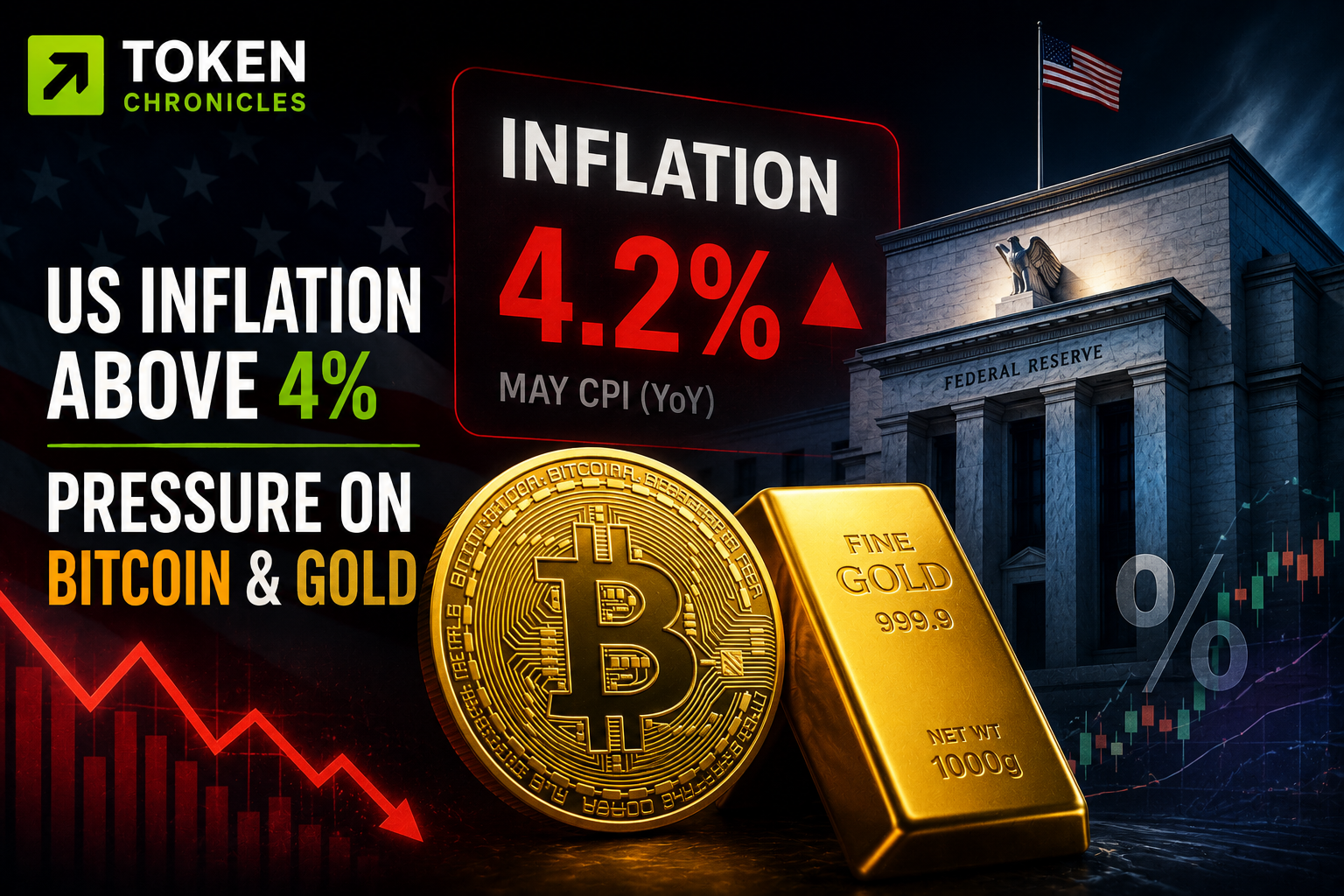


Recent turbulence across cryptocurrency markets has sparked concerns among investors, but CoinShares believes the current wave of capital outflows reflects a temporary sentiment-driven correction rather than a fundamental collapse in the digital asset market.
According to James Butterfill, Head of Research at CoinShares, the sharp withdrawal of capital from crypto investment products is being driven primarily by macroeconomic uncertainty, geopolitical tensions, and shifting investor preferences rather than any underlying weakness in blockchain technology or digital asset adoption.
While billions of dollars have exited the market in recent weeks, Butterfill argues that the industry is experiencing a confidence shock rather than a structural crisis.
Investor Sentiment Deteriorates as Macro Risks Rise
Cryptocurrency markets have faced mounting pressure as investors grapple with a combination of geopolitical uncertainty, higher interest rate expectations, and a significant rotation of capital toward artificial intelligence-related investments.
Butterfill noted that sentiment across the digital asset sector has deteriorated rapidly as global markets react to escalating geopolitical tensions and changing monetary policy expectations.
“This is a pure sentiment shock rather than a structural break.”
According to CoinShares, much of the recent weakness can be traced to concerns surrounding the Middle East conflict and its potential impact on inflation, energy markets, and central bank policy.
As geopolitical risks increased, investors began reassessing expectations for interest-rate cuts that many had anticipated earlier in the year.
Instead of pricing in easier monetary conditions, markets have increasingly shifted toward the possibility that interest rates could remain elevated for longer—or even move higher if inflation pressures persist.
That shift has reduced investor appetite for risk assets, including cryptocurrencies.
Bitcoin ETFs Record Major Capital Withdrawals
The decline in sentiment has been particularly evident within the U.S. spot Bitcoin ETF market.
After months of serving as one of Bitcoin’s strongest sources of institutional demand, spot Bitcoin exchange-traded funds recently experienced a sharp reversal in flows.
Data shows that U.S. spot Bitcoin ETFs recorded approximately $1.72 billion in net outflows during the past week alone, marking one of the largest withdrawal periods since the products launched.
The ETF selling has become a key focus for market participants because these products have played an increasingly important role in driving institutional participation within the crypto ecosystem.
When inflows accelerate, they often support bullish momentum. Conversely, sustained outflows can create significant downward pressure on prices and investor confidence.
The recent withdrawals have therefore reinforced concerns that large investors are becoming more cautious toward digital assets in the current macroeconomic environment.
AI Investment Boom Competes for Capital
Another factor weighing on crypto markets is the growing competition for investor capital from the artificial intelligence sector.
Over the past year, AI-related companies have attracted hundreds of billions of dollars in new investment as investors rush to gain exposure to what many view as the next major technological revolution.
This capital rotation has diverted attention away from cryptocurrencies and other alternative assets.
Institutional investors managing limited pools of capital are increasingly being forced to make allocation decisions between competing growth themes, with artificial intelligence currently capturing a significant share of market enthusiasm.
While crypto remains a long-term investment theme for many funds, the AI boom has become a powerful short-term competitor for investor attention and capital deployment.
Analysts Warn Bitcoin Recovery Remains Fragile
Although Bitcoin has recently staged a modest rebound from recent lows, not all market observers are convinced that a sustainable recovery has begun.
Paul Howard, Senior Director at liquidity provider Wincent, believes the recent recovery should be viewed with caution.
According to Howard, last week’s outflows reflected a broader risk-off environment rather than crypto-specific concerns.
He noted that pressure across technology stocks and other growth assets demonstrates that investors are reassessing risk exposure across the board.
Howard also pointed to technical indicators suggesting that market conditions remain fragile.
Bitcoin’s recent break below an important moving average has raised concerns that the market may be entering a more defensive phase, while elevated volatility in CME Bitcoin futures indicates traders remain highly sensitive to macroeconomic headlines.
As a result, Howard believes the current rebound may not yet provide sufficient evidence of a lasting trend reversal.
Strategy’s Bitcoin Sale Was More Symbolic Than Material
Another narrative that gained traction during the selloff involved Strategy’s sale of 32 Bitcoin in late May.
Many market participants initially interpreted the transaction as a sign that one of Bitcoin’s largest corporate supporters might be changing its stance.
However, analysts argue that the sale itself was far too small to have materially impacted the market.
Adam Haeems, Head of Asset Management at Tesseract Group, explained that the transaction generated only around $2.5 million, an amount insignificant relative to Bitcoin’s daily trading volume and overall market capitalization.
Instead, he believes the sale’s impact was psychological.
“It unsettled confidence because Strategy had been treated as a near one-way source of corporate demand, but it was a signal shock, not the flow behind the fall.”
For years, investors viewed Strategy as one of Bitcoin’s most consistent and aggressive buyers. Any departure from that pattern naturally attracted attention, even if the actual transaction size was relatively insignificant.
Markets Searching for a New Catalyst
The broader challenge facing crypto markets is the absence of a strong positive catalyst capable of offsetting current macroeconomic headwinds.
Investors continue monitoring several key factors:
- Future Federal Reserve policy decisions
- Geopolitical developments in the Middle East
- Bitcoin ETF flow trends
- Institutional investment activity
- AI-driven capital rotation
- Broader equity market performance
Until greater clarity emerges across these areas, many analysts expect volatility to remain elevated.
Long-Term Fundamentals Remain Intact
Despite the recent correction, CoinShares maintains that the industry’s underlying fundamentals remain largely unchanged.
The firm argues that blockchain adoption continues to expand, institutional infrastructure remains stronger than in previous cycles, and regulatory clarity is gradually improving across major jurisdictions.
From this perspective, the current downturn appears more consistent with a temporary repricing of risk assets than a fundamental challenge to the long-term digital asset thesis.
While sentiment has clearly weakened, Butterfill’s assessment suggests that investors should distinguish between short-term market psychology and long-term structural health.
A Sentiment Reset Rather Than a Structural Crisis
For now, CoinShares views the recent wave of crypto outflows as a reaction to external macroeconomic forces rather than evidence of a breakdown within the cryptocurrency ecosystem itself.
The combination of geopolitical uncertainty, delayed expectations for interest-rate cuts, and fierce competition from AI investments has created a difficult environment for risk assets.
However, unlike previous market downturns driven by exchange failures, liquidity crises, or industry-specific shocks, the current weakness appears rooted primarily in investor sentiment.
Whether Bitcoin and the broader crypto market can regain momentum will likely depend on the return of institutional inflows, improving macroeconomic conditions, and renewed confidence among investors searching for the next catalyst to drive the market higher.