
The cryptocurrency industry witnessed another eventful day as a major decentralized stablecoin lost its peg, U.S. crypto legislation encountered an unexpected delay, and Binance explored alternative regulatory options to maintain its presence in Europe.

Magic Internet Money Suffers Sharp Depeg
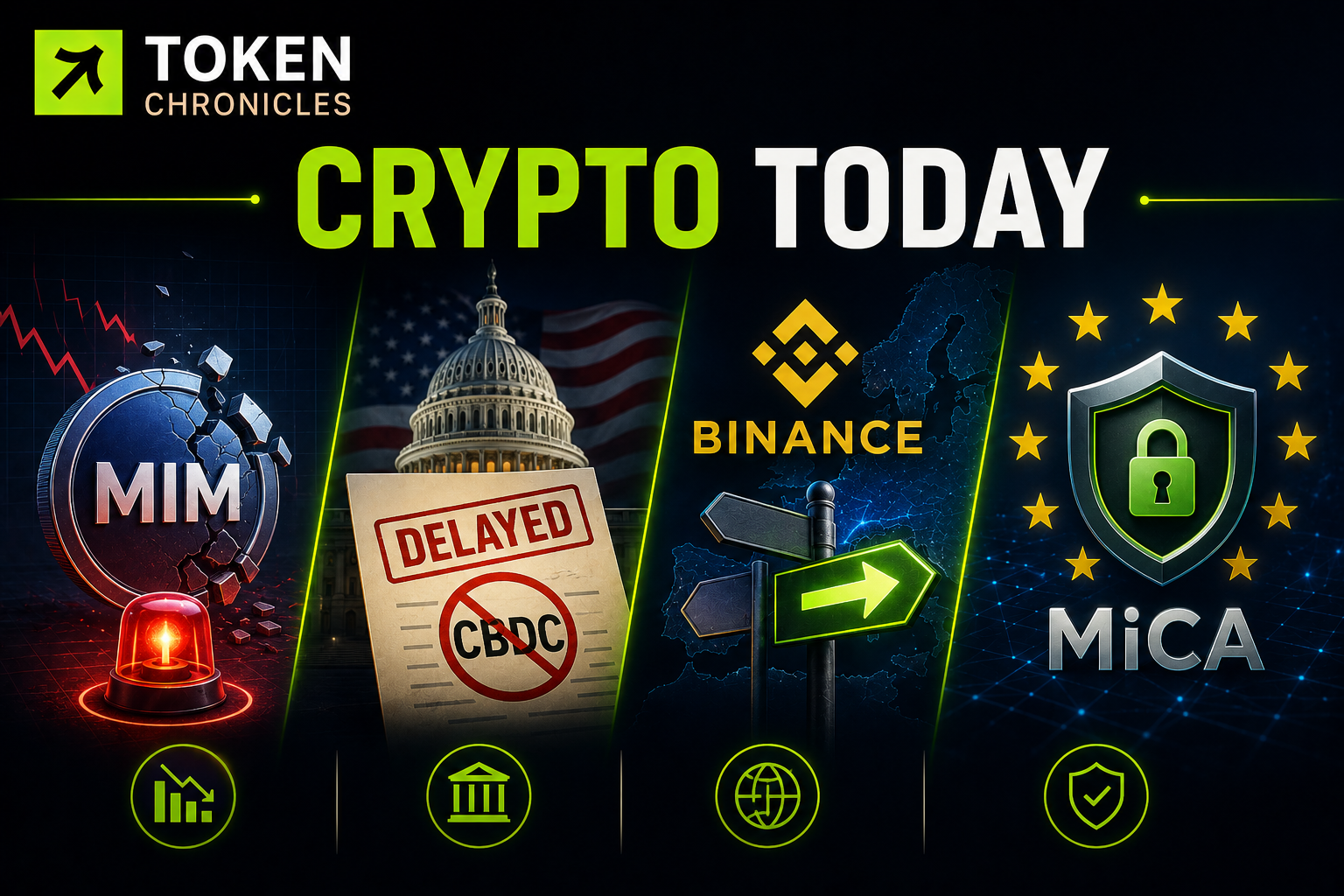
Decentralized finance protocol Abracadabra activated emergency measures after its stablecoin, Magic Internet Money (MIM), dropped nearly 50% below its intended $1 value.
To stabilize the ecosystem, the platform announced an immediate increase in borrowing costs across its lending markets. The move is designed to encourage users to repay outstanding loans, reducing the circulating supply of MIM and helping restore its peg.
The incident highlights the ongoing challenges faced by crypto-backed stablecoins, particularly during periods of weak liquidity and heightened market volatility.
Unlike fiat-backed stablecoins, decentralized collateralized stablecoins rely on crypto assets as reserves, making them more vulnerable to sudden market swings when investor confidence weakens.
Trump Postpones CBDC Ban Bill
U.S. President Donald Trump has delayed signing the 21st Century ROAD to Housing Act, legislation that includes a temporary prohibition on the Federal Reserve issuing a Central Bank Digital Currency (CBDC) through the end of 2030.
The bill had already secured overwhelming bipartisan support in both the Senate and House of Representatives and was widely expected to become law this week.
However, Trump announced that he would withhold his signature until Congress also approves the SAVE America Act, legislation focused on strengthening voter registration requirements.
The delay has introduced fresh uncertainty around the timeline for several crypto-related bills currently moving through Congress, including broader digital asset regulatory reforms.
Binance Explores New Licensing Options in Europe
Binance has reaffirmed its commitment to the European market despite facing regulatory hurdles in Greece.
Following reports that its Greek licensing application may not move forward under the European Union’s Markets in Crypto-Assets (MiCA) framework, the exchange indicated it is prepared to seek authorization through another EU member state.
Company executives emphasized that Binance remains committed to operating within Europe’s regulatory framework and is actively engaging with multiple financial regulators across the region.
The timing is particularly significant, as the EU’s MiCA transitional period expires on July 1, after which crypto companies without approved licenses may no longer be permitted to provide services throughout the European Economic Area.
European regulators have already warned that firms lacking authorization must suspend regulated crypto activities once the deadline arrives.
Regulation and Stability Dominate Crypto Headlines
Today’s developments reflect two of the industry’s biggest themes in 2026: regulatory transformation and financial stability.
While governments continue building comprehensive legal frameworks for digital assets, decentralized finance protocols are still working to prove the resilience of algorithmic and crypto-backed stablecoins during periods of market stress.
Meanwhile, major exchanges are racing to secure regulatory approval before Europe’s new crypto regime fully takes effect.
As global regulation accelerates and institutional participation grows, compliance and infrastructure are increasingly becoming just as important as innovation in shaping the future of the digital asset industry.