
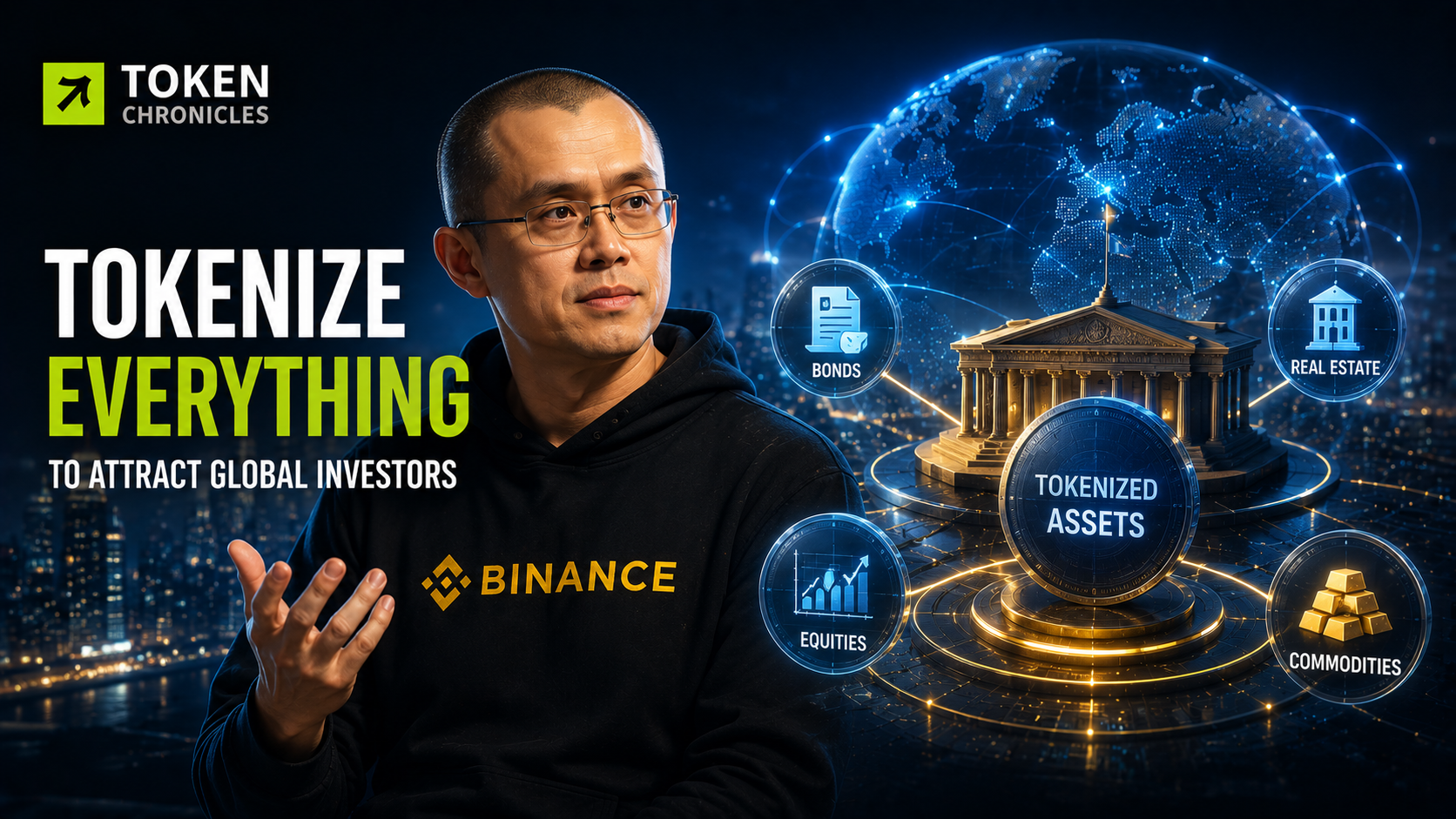
Binance founder Changpeng Zhao, known as CZ, has called for broader adoption of asset tokenization, arguing that governments and companies could use blockchain-based assets to expand access to global investors and potentially attract foreign capital.
In an Aug. 21 post on X, CZ urged the industry to “tokenize everything,” suggesting that tokenized representations of shares and other assets could make investment opportunities accessible across international markets.
CZ backs multichain tokenization
CZ supports issuing tokenized assets across multiple blockchains rather than concentrating activity on a single network. He acknowledged that a multichain approach could fragment liquidity, but argued that allowing different ecosystems to develop simultaneously could accelerate the growth of tokenized markets.
Greater interoperability between issuers and blockchain networks could eventually reduce some of that fragmentation. However, achieving meaningful interchangeability would require compatible settlement systems, redemption mechanisms, asset backing and legal rights.
The comments represent CZ’s broader view on tokenization and do not constitute a new investment initiative or formal product announcement from Binance, BNB Chain or any government.
Tokenization does not automatically mean foreign direct investment
Tokenization converts ownership rights or economic claims into blockchain-based digital units. The model can be applied to equities, bonds, funds, commodities, real estate and other financial or physical assets.
While tokenization can make assets easier to distribute and access digitally, it does not automatically create new investment or qualify transactions as foreign direct investment (FDI).
Under the OECD framework, FDI generally involves a foreign investor establishing a lasting interest in an enterprise, typically through ownership of at least 10% of its voting power. Smaller purchases of tokenized securities may instead be classified as portfolio investment.
Whether a tokenized asset attracts FDI therefore depends on factors such as ownership rights, voting power, investor location and the relationship between the investor and issuer.
BNB Chain reports surge in RWA adoption
CZ’s comments came as BNB Chain reported rapid growth in holders of tokenized real-world assets. Data from RWA.xyz showed 776,428 RWA holders on BNB Chain as of Aug. 19, representing a 368.51% increase over 30 days.
The platform recorded approximately $5.8 billion in distributed asset value across 1,284 assets. These figures cover specific asset categories tracked by the data provider and should not be interpreted as direct evidence of foreign investment.
Blockchain addresses also do not necessarily correspond one-to-one with individual investors.
BNB Chain has also attracted institutional tokenization activity, including a significant share of assets associated with Franklin Templeton’s Benji platform.
Tokenized securities still face regulatory requirements
Tokenizing a security does not remove the legal obligations attached to the underlying asset. Stocks, bonds and other securities represented on blockchain networks remain subject to applicable securities laws, including requirements surrounding issuance, disclosure, custody, investor eligibility and secondary trading.
CZ did not announce a specific tokenization project, regulatory application or launch timeline. For governments and companies to turn the concept into a viable investment channel, they would still need to establish clear rules governing ownership, settlement, investor protection and cross-border participation.
The broader takeaway: tokenization could expand the reach of global capital markets, but blockchain distribution alone cannot solve liquidity, regulatory or ownership challenges. The next phase will depend on interoperability, legal clarity and whether issuers can convert tokenized access into genuine investment demand.