
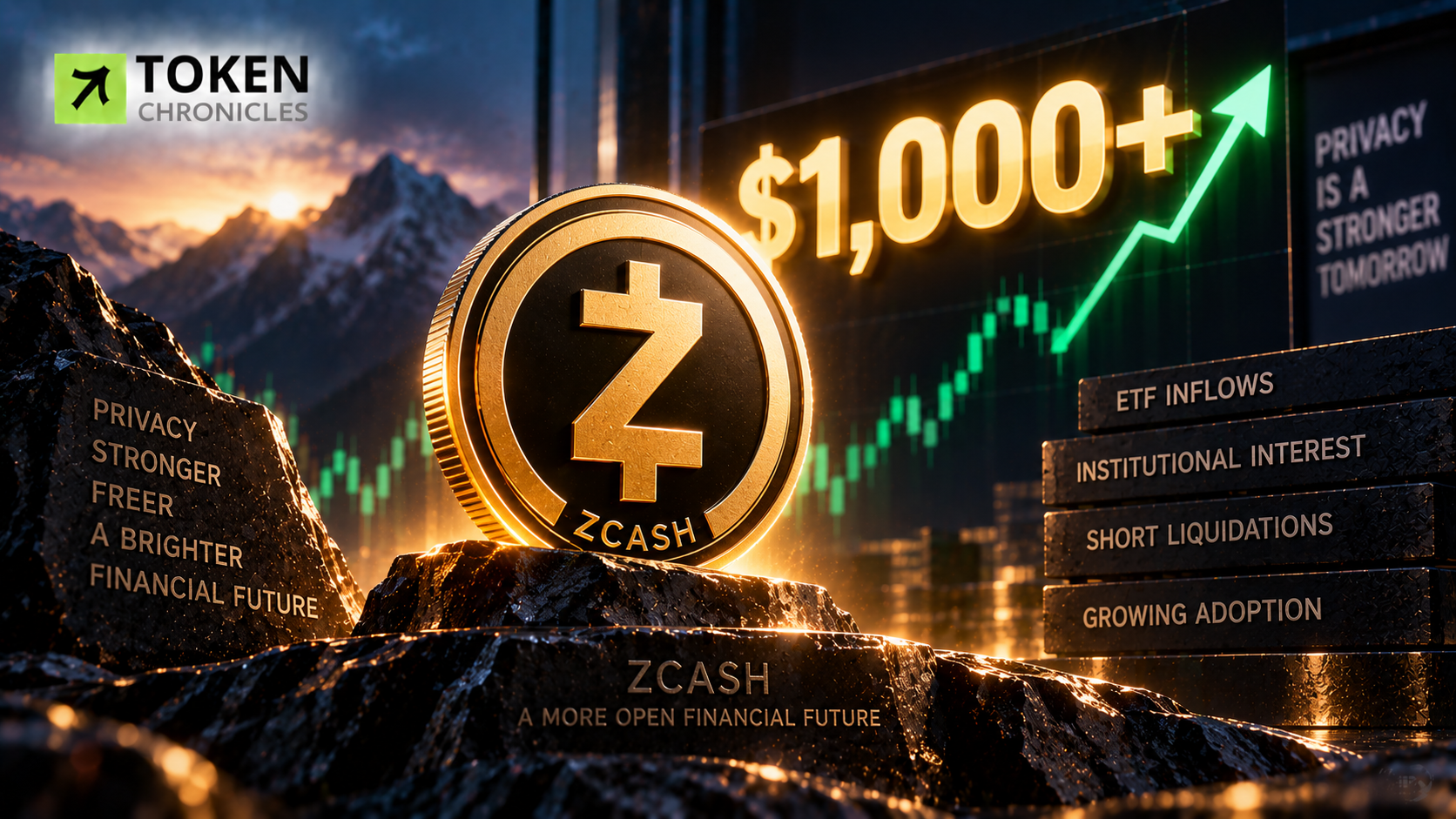
Zcash (ZEC) climbed above $1,000 this week for the first time since its 2016 debut, putting the privacy-focused cryptocurrency back in the spotlight. The rally has attracted support from prominent crypto investors and analysts, while growing ETF assets and a wave of short liquidations have added fuel to the move.
- ZEC reached $1,046 on Sept. 4, lifting its market capitalization to roughly $17 billion.
- Zcash now ranks around 11th among cryptocurrencies, ahead of Dogecoin by market value.
- Grayscale’s ZCSH ETF reached approximately $414.7 million in assets after launching in August.
- About $34.5 million in ZEC short positions were liquidated as the price surged.
- Bitwise’s Matt Hougan and Alliance DAO’s Qiao Wang have identified Zcash alongside Bitcoin as an important cryptocurrency holding.
Zcash Breaks Through the $1,000 Mark
Zcash has staged one of the strongest rallies in the cryptocurrency market this year, taking ZEC above the $1,000 threshold.
Arthur Hayes drew attention to the move on Thursday after sharing a chart showing ZEC trading above $1,020 and joking about the potential impact of the rally on his personal wealth.
The price action represents a dramatic turnaround from earlier this year.
Zcash traded near $250 in early June before moving through the $400-$580 range during July. Momentum accelerated after Aug. 21, eventually pushing the privacy coin into four-digit territory.
The last time ZEC traded at comparable levels was shortly after its launch in late 2016, when the token experienced an exceptionally volatile debut.
ZEC Market Value Reaches $17 Billion
At the latest market levels, ZEC was trading around $1,010 after reaching an intraday high of approximately $1,046.
The token has gained roughly 98% over 30 days and more than 2,200% over the past year, according to the figures cited in the report.
Its market capitalization has climbed to approximately $17 billion, placing Zcash around 11th among major crypto assets and above Dogecoin, whose market value stood near $13.4 billion.
The rally has also significantly outpaced Bitcoin.
While ZEC surged, Bitcoin declined approximately 1.4% over the same 24-hour period, suggesting that the move is not simply a reflection of broad-based strength across the cryptocurrency market.
Short Sellers Take Heavy Losses
The rapid price increase has created substantial pressure on traders betting against Zcash.
Approximately $34.5 million in ZEC short positions were liquidated on Friday, while open interest reached roughly $2.15 billion.
The combination of rapidly rising prices and heavy leverage can intensify market movements. When short positions are forcibly closed, traders may need to buy ZEC to cover their positions, potentially creating additional upward pressure.
However, the same leverage can work in reverse.
If the rally loses momentum and ZEC begins falling, long positions could face forced liquidations, potentially accelerating a decline.
That makes the unusually high open interest an important risk factor even as bullish sentiment remains strong.
Grayscale’s Zcash ETF Adds Institutional Exposure
Zcash’s rally has coincided with the launch of a U.S. spot ETF focused on the cryptocurrency.
Grayscale converted its Zcash Trust into ZCSH, giving investors access to a regulated exchange-traded product holding ZEC directly.
The fund began trading on NYSE Arca on Aug. 25.
Grayscale set the ETF’s management fee at 2.5%, a relatively high charge compared with many traditional cryptocurrency ETFs. The company has said part of the fee will be directed toward supporting the Zcash ecosystem.
By Sept. 3, ZCSH reportedly held approximately $414.7 million in assets, up from around $304 million when the trust was converted.
The ETF’s rapid asset growth has added another potential source of demand for ZEC and strengthened the narrative around institutional interest in privacy-focused digital assets.
Why Crypto Investors Are Highlighting Zcash
Arthur Hayes has been among the most visible supporters of the recent Zcash rally, but other prominent industry figures have also highlighted the asset.
Matt Hougan, chief investment officer at Bitwise, recently described three major crypto themes he believes investors should consider.
In his framework, Bitcoin represents protection against currency debasement, Zcash represents privacy, and Ethereum, Solana and Uniswap provide exposure to a longer-term tokenization trend.
Qiao Wang, a founding partner at Alliance DAO, has also disclosed that his personal cryptocurrency holdings consist primarily of Bitcoin and Zcash.
Wang has said that stocks account for the majority of his overall wealth, while cryptocurrency represents a smaller allocation. Nevertheless, he has argued that his Zcash position has a risk-adjusted profile that compares favorably with his broader equity investments.
These endorsements have helped strengthen the argument that privacy could become a more important theme in the next phase of crypto adoption.
Zcash’s Rally Comes With Significant Risks
Despite the bullish narrative, Zcash’s price performance also raises questions about sustainability.
A cryptocurrency that has gained more than 2,000% in roughly one year can experience substantial corrections even without a major change in its underlying fundamentals.
The nearly $2.15 billion in open interest adds another layer of volatility. A continued rally could trigger additional short liquidations and push prices higher, while a sharp reversal could produce a cascade of long liquidations.
The ZCSH ETF also carries a 2.5% annual fee, which could become a headwind if investor enthusiasm declines and inflows slow after the initial launch period.
Privacy Becomes a Major Crypto Narrative
Zcash’s latest surge reflects more than a single price breakout.
The rally combines several powerful narratives: renewed interest in privacy, growing institutional access through ETFs, increased attention from prominent crypto investors and significant leverage in derivatives markets.
Whether those forces can sustain ZEC above $1,000 remains uncertain.
For now, however, Zcash has returned to a position few market participants expected earlier this year a privacy-focused cryptocurrency with a roughly $17 billion valuation and a renewed place among the largest digital assets.