
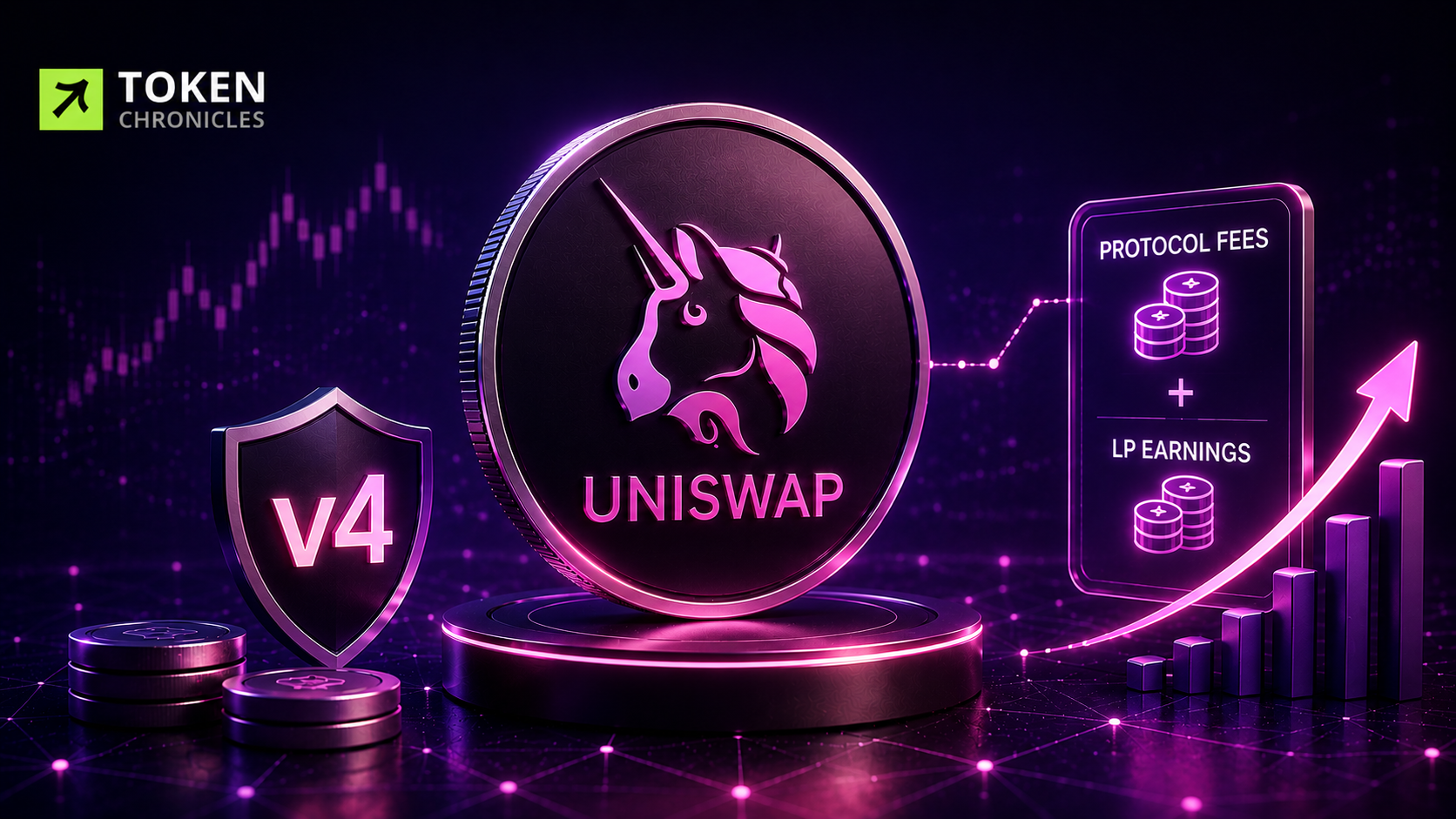
Uniswap founder Hayden Adams has rejected criticism surrounding the activation of protocol fees in Uniswap v4, arguing that recent claims suggesting the update reduces liquidity providers’ (LPs) earnings are based on misunderstandings of how the fee model works.
In a post on X, Adams described the criticism as “FUD and misunderstanding,” saying the newly approved protocol fees do not take a direct share of existing LP rewards.
Adams Clarifies Fee Structure
Addressing concerns from the community, Adams disputed claims that Uniswap is capturing 25% of liquidity providers’ profits through the new fee mechanism.
Using a liquidity pool with a 30-basis-point (0.30%) trading fee as an example, he explained that a 5-basis-point protocol fee represents roughly 14% of the total swap fee, rather than reducing the fees already earned by liquidity providers.
According to Adams, the protocol fee is designed to operate as an additional fee layer, meaning it is not deducted from the existing fee allocation that LPs receive.
Governance Approves v4 Protocol Fees
The clarification follows a recent governance vote in which the Uniswap community approved activating protocol fees for selected Uniswap v4 liquidity pools across multiple blockchain networks.
The decision marks one of the first implementations of protocol-level revenue generation under Uniswap v4, allowing a portion of trading fees from designated pools to be directed to the protocol.
Community Debate Continues
The activation of protocol fees has sparked debate within the decentralised finance (DeFi) community, with some users expressing concern that additional protocol revenue could reduce incentives for liquidity providers.
However, Adams maintains that these concerns stem from an incorrect interpretation of the fee structure and that LP earnings remain unaffected under the approved model.
Uniswap Remains DeFi’s Largest DEX
Despite the controversy, Uniswap continues to dominate the decentralised exchange sector.
According to DefiLlama, the protocol currently secures approximately $3.06 billion in total value locked (TVL), making it the largest decentralised exchange in the DeFi ecosystem.
As Uniswap v4 continues rolling out new features, the protocol’s governance decisions around fee distribution are expected to remain a key topic of discussion among developers, liquidity providers and token holders.