

Growing concerns over cryptocurrency-related fraud have prompted U.S. lawmakers to introduce new legislation aimed at tightening oversight of crypto ATM operators and strengthening consumer protections nationwide.
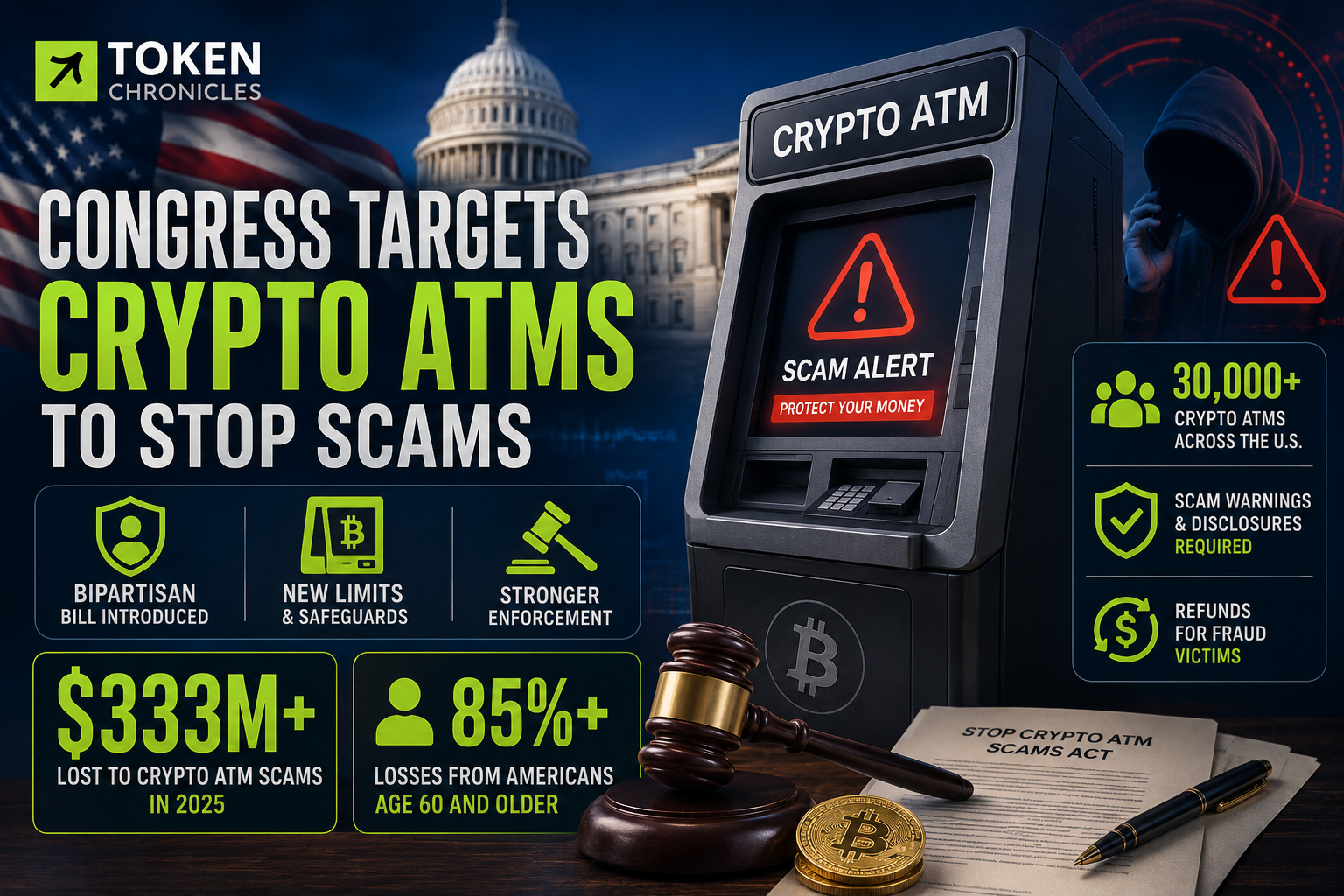
The proposed Stop Crypto ATM Scams Act, introduced by Representatives María Elvira Salazar (R-FL) and Sean Casten (D-IL), seeks to curb the rapid rise in crypto ATM scams after Americans reportedly lost more than $333 million through fraudulent transactions in 2025.
Crypto ATM Fraud Reaches Alarming Levels
According to data cited from the FBI, reported losses linked to cryptocurrency ATM scams surged by 33% year-over-year, highlighting a growing challenge for regulators and law enforcement agencies.
The impact has been particularly severe among older Americans. Individuals aged 60 and above accounted for more than 85% of all known-age financial losses, making senior citizens the primary target of many scam operations.
Lawmakers say criminals frequently impersonate banks, government agencies, law enforcement officials, and trusted institutions before convincing victims to transfer funds through crypto ATMs.
“The rise in crypto ATM fraud has become one of the fastest-growing financial crime trends in the United States,” lawmakers noted while unveiling the proposal.
New Rules Would Tighten Oversight of Crypto ATMs
If passed, the legislation would introduce a series of nationwide safeguards designed to make crypto ATM transactions more transparent and harder for scammers to exploit.
Among the proposed requirements:
Transaction Limits
New Customers
- Maximum daily transaction limit: $2,000
- Maximum cumulative deposits during the first 14 days: $10,000
Existing Customers
- Daily transaction limit: $7,500
Lawmakers believe these restrictions could significantly reduce large-scale losses before fraud is detected.
Enhanced Consumer Protection Measures
The bill would also require crypto ATM operators to implement stronger compliance and transparency procedures, including:
- Mandatory anti-money laundering (AML) programs
- Customer identity verification and due diligence
- Suspicious activity reporting requirements
- Detailed transaction and kiosk location records
- Clear fraud and scam warnings before transactions
- Transparent fee disclosures
- Real-time cryptocurrency pricing information
- Refund mechanisms for qualifying fraudulent transactions
The goal is to ensure users fully understand the risks before sending funds and to provide additional safeguards when fraud occurs.
A Growing Industry Faces Greater Scrutiny
The United States currently hosts more than 30,000 cryptocurrency ATMs, making it the largest crypto ATM market globally.
These machines are commonly located in:
- Convenience stores
- Gas stations
- Shopping centers
- Retail outlets
While crypto ATMs have expanded access to digital assets, regulators increasingly view them as attractive targets for fraudsters due to their ease of use and the irreversible nature of cryptocurrency transactions.
States Could Still Add Additional Protections
Importantly, the proposed legislation would establish a federal baseline for crypto ATM regulation while allowing individual states to introduce stronger consumer protection measures if desired.
This approach aims to create national consistency without limiting state-level efforts to combat emerging fraud schemes.
Why the Bill Matters
The legislation reflects a broader shift in Washington toward balancing innovation with consumer protection as cryptocurrency adoption continues to expand.
Rather than restricting access to digital assets, lawmakers say the bill focuses on addressing one of the industry’s most vulnerable areas: scams targeting everyday users, particularly seniors.
With crypto ATM losses now exceeding hundreds of millions of dollars annually, policymakers are signaling that stronger safeguards may soon become a standard part of the digital asset landscape.
If enacted, the Stop Crypto ATM Scams Act would represent one of the most comprehensive federal efforts to regulate cryptocurrency ATM operations and combat crypto-related financial fraud in the United States.