

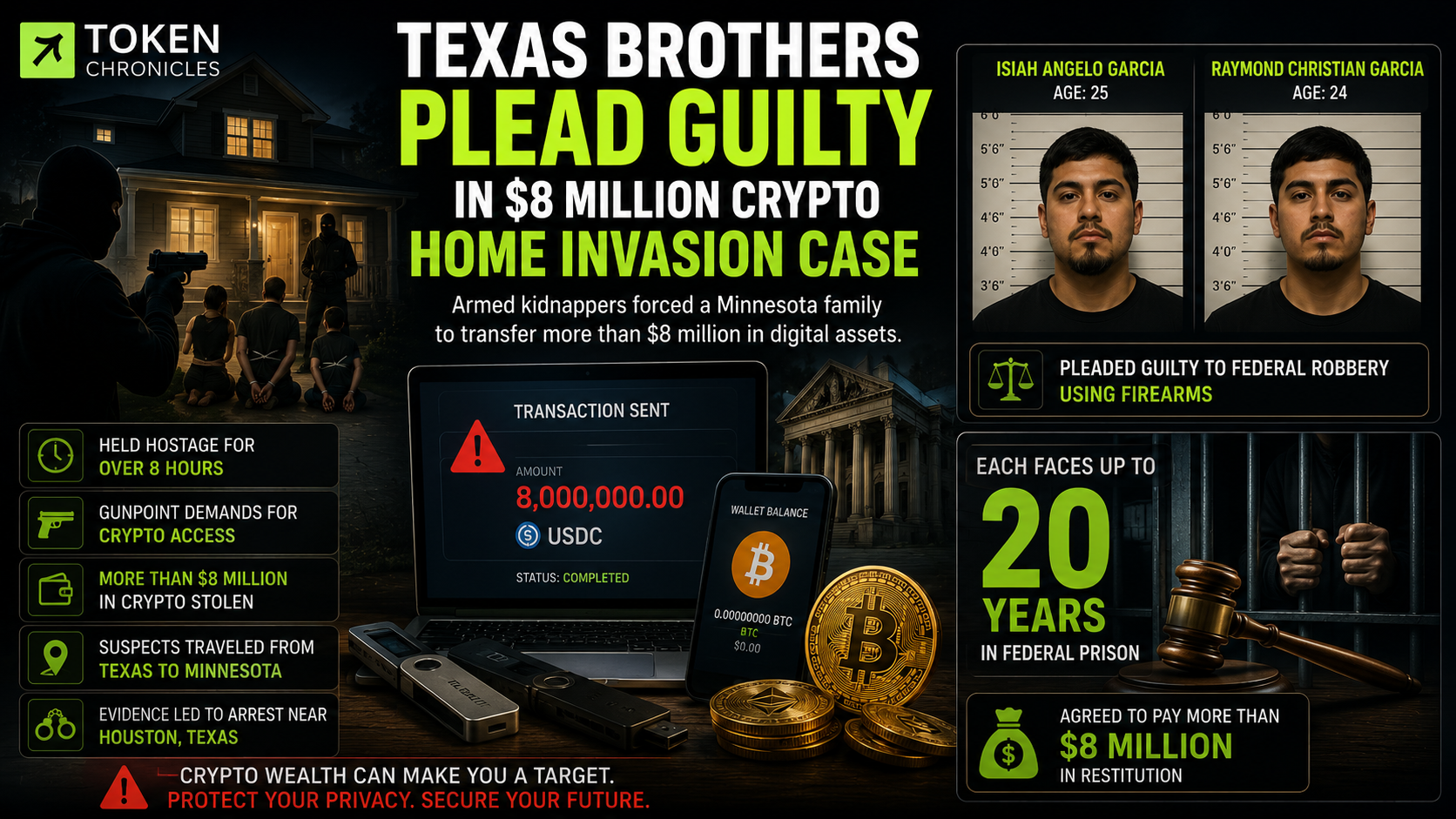
Two men from Texas have admitted their involvement in a violent cryptocurrency robbery that forced a Minnesota family to transfer more than $8 million in digital assets at gunpoint.
Federal prosecutors say the case is one of the most serious crypto-related violent crimes prosecuted in recent years, highlighting the growing security risks associated with large digital asset holdings.
Family Held Hostage for Hours
According to court filings, brothers Isiah Garcia, 25, and Raymond Garcia, 24, traveled from Texas to Minnesota in September 2025 and carried out an armed home invasion targeting a family believed to own substantial cryptocurrency holdings.
During the attack, the victims were restrained and held at gunpoint for more than eight hours while the assailants demanded access to cryptocurrency wallets and storage devices.
Authorities said one of the victims was forced to travel to another property to retrieve additional crypto storage devices before transferring the funds under duress.
More Than $8 Million Stolen
Investigators allege the brothers coerced the victim into transferring over $8 million worth of cryptocurrency during the incident.
After the robbery, the suspects fled the scene, but evidence left behind helped investigators identify and track them to the Houston area, where they were later arrested.
Both men have now pleaded guilty to federal robbery charges and admitted to using firearms during the crime.
Prison Time and Restitution Ahead
As part of their plea agreements, the brothers have agreed to pay more than $8 million in restitution to the victims.
They each face a maximum sentence of 20 years in federal prison, with sentencing hearings expected at a later date.
A Growing Security Concern for Crypto Holders
The case has once again drawn attention to the increasing number of physical attacks targeting cryptocurrency investors and wealthy digital asset holders.
Unlike traditional bank accounts, large crypto holdings can sometimes make individuals targets for extortion, kidnappings, and violent robberies aimed at forcing wallet access or private key transfers.
As digital assets become more mainstream, security experts continue to stress the importance of protecting not only online wallets and devices, but also personal privacy and physical safety.
The Minnesota case serves as a stark reminder that in the world of crypto, security extends far beyond the blockchain itself.