

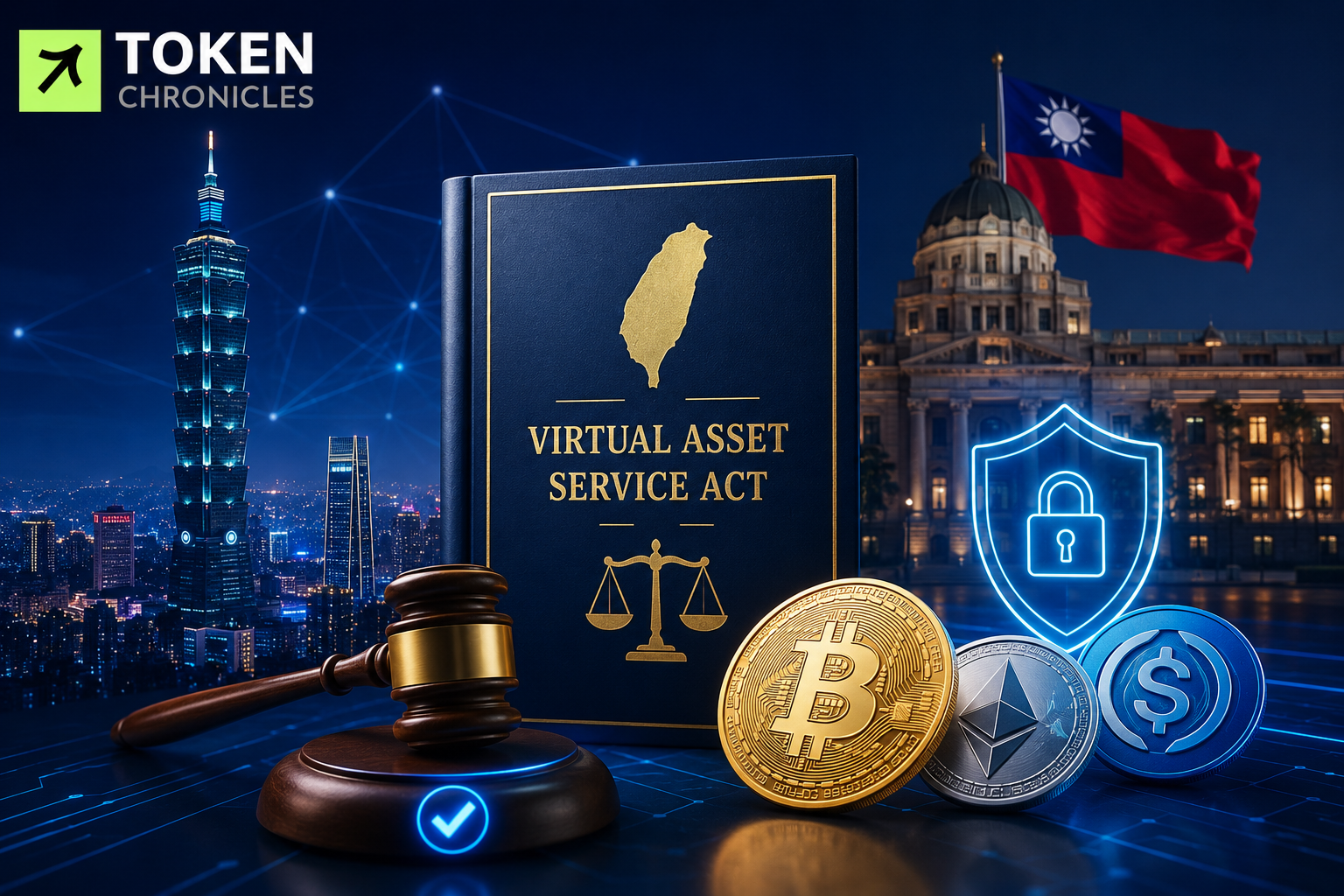
Taiwan has taken a major step toward regulating the cryptocurrency industry after its legislature passed the Virtual Asset Service Act, creating a comprehensive legal framework for crypto exchanges, stablecoin issuers, and other digital asset businesses.
The bill cleared its third reading in the Legislative Yuan on Tuesday and now awaits formal promulgation by President Lai Ching-te. Once signed into law, the Cabinet will announce when the legislation takes effect.
Licensing Becomes Mandatory
Under the new framework, all virtual asset service providers (VASPs) must obtain approval from Taiwan’s Financial Supervisory Commission (FSC) before offering crypto-related services.
The law introduces stricter standards covering:
- Licensing requirements for crypto businesses
- Cybersecurity and operational risk management
- Client asset segregation
- Internal compliance and governance controls
Crypto firms that have already completed Taiwan’s anti-money laundering (AML) registration will receive a transition period. They will have 12 months to apply for an FSC license and up to 21 months to obtain full regulatory approval.
Stablecoin Issuers Face Tight Oversight
The legislation also establishes a regulatory framework for stablecoins.
Companies wishing to issue or manage stablecoins must receive approval from both the FSC and Taiwan’s central bank. They will also be required to maintain full reserve backing, reinforcing confidence in digital assets linked to fiat currencies.
Tough Penalties for Violations
Taiwan’s new crypto law includes significant criminal penalties aimed at protecting investors and maintaining market integrity.
Operating an unlicensed virtual asset business or issuing unauthorized stablecoins could result in prison sentences of up to seven years, alongside fines reaching NT$100 million (approximately $3.14 million).
Meanwhile, fraud, market manipulation, and other serious crypto-related offenses may carry prison terms of three to ten years, with financial penalties ranging from NT$10 million to NT$200 million.
Greater Legal Certainty for the Industry
The new legislation is expected to remove much of the regulatory uncertainty that has surrounded Taiwan’s crypto market.
Industry experts believe many businesses that previously operated under limited regulatory guidance will now need to comply with clear licensing and operational standards.
At the same time, the framework is expected to encourage participation from traditional financial institutions, potentially increasing competition across Taiwan’s digital asset sector.
Industry Preparing for the Transition
Taiwan’s Virtual Asset Service Provider Association has indicated it will work closely with regulators to develop detailed implementation rules covering licensing procedures, staffing requirements, operational standards, and compliance obligations.
The association also plans to help existing crypto firms navigate the transition period as the market adjusts to the new regulatory environment.
Why It Matters
Taiwan’s Virtual Asset Service Act represents one of the country’s most significant crypto regulatory reforms to date. By introducing licensing requirements, stronger investor protections, and clear stablecoin rules, the legislation aims to provide legal certainty while creating a more transparent and regulated digital asset market. The framework could also encourage greater institutional participation as Taiwan continues positioning itself as a regulated hub for blockchain and digital asset innovation.