
Robinhood CEO Vlad Tenev has reignited speculation about the company’s future memecoin strategy after responding to a social media proposal calling for broader memecoin access on the platform. His brief response offered no confirmation of new listings, but the timing has drawn attention as Robinhood expands its blockchain infrastructure and memecoin activity grows across Robinhood Chain.
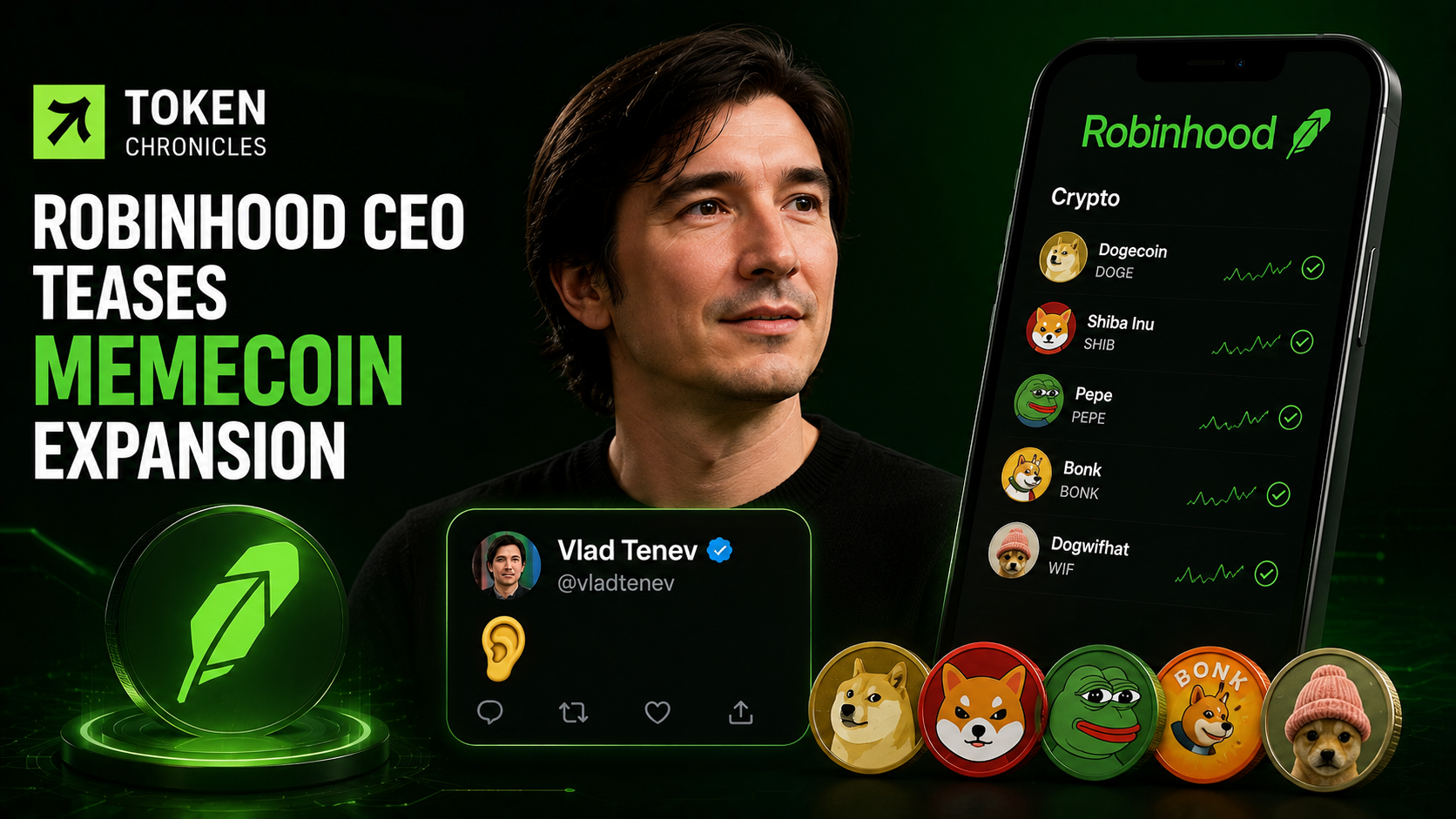
- Tenev responded to a memecoin proposal with an ear emoji, suggesting he was listening but making no formal announcement.
- Robinhood already supports several major memecoins, including Dogecoin, Shiba Inu, Pepe, Bonk and Dogwifhat for eligible U.S. users.
- Robinhood Chain launched in July as an Ethereum Layer 2 focused on tokenized assets and decentralized applications.
- Speculative decentralized-exchange activity has contributed significantly to recent activity on Robinhood Chain.
- Robinhood has not confirmed a new memecoin listing, launch schedule or dedicated memecoin marketplace.
Tenev’s Brief Reply Sparks Community Speculation
The latest speculation began after an X user revived a proposal suggesting that Robinhood expand its memecoin offerings.
Tenev responded with an ear emoji, a common social-media signal indicating that someone is paying attention.
While the response generated interest among crypto traders, it falls well short of an official product announcement.
Robinhood has not identified a particular token that could be added to its platform, announced a listing timetable or disclosed plans for a new memecoin-focused trading product.
For a cryptocurrency to appear on a regulated brokerage platform, several factors can come into play, including custody, liquidity, technical infrastructure, compliance requirements and legal considerations.
Robinhood also notes that cryptocurrency availability can vary depending on the customer’s location.
Consequently, Tenev’s response is best interpreted as engagement with a community suggestion rather than confirmation of an upcoming listing.
Robinhood Already Has a Growing Memecoin Lineup
Although speculation centers on future expansion, Robinhood is already active in the memecoin market.
The company has supported Dogecoin since 2018 and later added Shiba Inu following strong community demand.
Its current U.S. cryptocurrency lineup also includes memecoins such as Pepe, Bonk and Dogwifhat, along with other community-driven tokens.
Availability can differ across jurisdictions and individual U.S. states because Robinhood’s crypto services operate within applicable regulatory requirements.
The company’s existing lineup demonstrates that memecoins are already part of its crypto business.
The bigger question is what Tenev’s response actually points toward.
Potentially, the discussion could involve:
- Additional memecoin listings
- Expanded token trading capabilities
- Greater integration with Robinhood Chain
- Access to decentralized markets
- New tools for onchain token trading
At present, however, there is no confirmed indication that any particular direction has been selected.
Robinhood Chain Changes the Equation
The speculation has gained additional momentum because Robinhood now operates its own blockchain infrastructure.
Robinhood Chain launched its mainnet on July 1 as a permissionless Ethereum Layer 2 built using Arbitrum technology. The network uses ETH for transaction fees and publishes its data to Ethereum.
Robinhood originally positioned the chain primarily around tokenized real-world assets, decentralized finance and financial applications.
Tokenized stocks and around-the-clock financial markets were among the major use cases emphasized at launch.
However, Tenev previously acknowledged that while the network was designed with real-world assets in mind, it could also support meme-related activity.
That distinction is important.
A token can exist and trade on Robinhood Chain without being officially listed or endorsed by Robinhood’s brokerage platform.
Because the blockchain is permissionless, independent developers can create tokens and decentralized applications without obtaining a traditional listing from Robinhood.
Therefore, a memecoin operating on Robinhood Chain should not automatically be interpreted as a Robinhood-approved asset.
Speculative Trading Is Driving Chain Activity
The growing amount of speculative activity on Robinhood Chain provides another reason for the renewed memecoin discussion.
Blockchain analytics firm Arkham reported that the network generated approximately $2.13 million in fees during one 24-hour period, temporarily exceeding the fee totals recorded by several larger blockchain networks during that particular snapshot.
Arkham attributed much of the activity to decentralized-exchange trading, including markets connecting memecoins with tokenized equities.
The numbers should nevertheless be viewed in context.
A single 24-hour period cannot establish that Robinhood Chain has permanently surpassed larger networks in users, liquidity or overall economic activity.
High fees can result from temporary speculation, increased transaction demand or network congestion.
The activity also does not reveal whether transactions came from a large retail user base or a smaller number of highly active or automated traders.
Memecoin Growth Brings Additional Risks
A larger memecoin presence could potentially increase trading activity and revenue, but it would also introduce additional risks.
Memecoins can experience extreme price swings and limited liquidity, while social-media-driven campaigns can amplify speculation and create opportunities for manipulation.
Robinhood has already encountered the security challenges associated with social-media promotion.
In July, Tenev’s X account was compromised and used to promote a fraudulent token called Vladhood. Robinhood subsequently stated that the token had no connection to the company or its CEO.
Tenev later indicated that social engineering had been used against X customer support to circumvent security protections.
The incident highlights why informal social-media comments need to be distinguished from verified company announcements.
What Could Robinhood Do Next?
Several possibilities remain open.
Robinhood could eventually expand its supported memecoin lineup, develop additional onchain trading functionality or provide customers with easier access to decentralized applications.
The company’s blockchain could also become a bridge between its large retail customer base and broader onchain markets.
But none of these possibilities has been formally confirmed.
Robinhood has not announced an automatic listing system for tokens created on Robinhood Chain, nor has it unveiled a dedicated memecoin launchpad or marketplace.
For now, the strongest evidence is simply that the company’s leadership appears willing to engage with the growing community demand for memecoin access.
Tenev’s brief response may prove to be an early signal of a broader strategy—or nothing more than a social-media interaction. Until Robinhood publishes an official announcement or updates its supported-asset lineup, any claim of an imminent memecoin expansion remains speculation.