

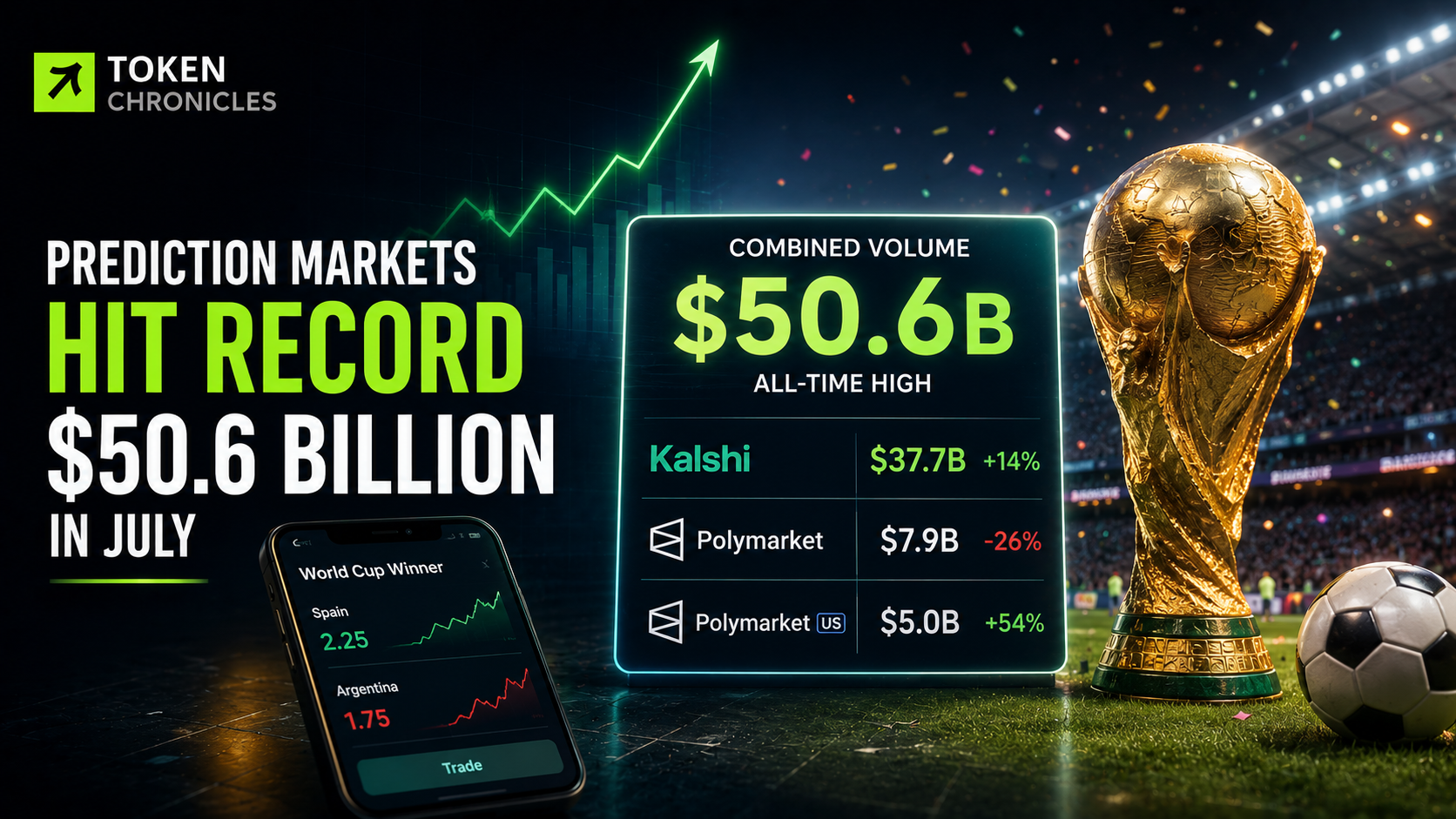
Prediction markets reached a new milestone in July, with Kalshi, Polymarket, and Polymarket US recording a combined $50.6 billion in monthly trading volume, the highest level ever reported. The surge was fueled largely by intense betting activity surrounding the FIFA World Cup, highlighting the growing mainstream appeal of event-based trading platforms.
According to industry data, total trading volume increased 7.8% month over month, rising from $46.95 billion in June to $50.59 billion in July.
Kalshi Extends Its Market Leadership
Among the major platforms, Kalshi remained the dominant player, generating approximately $37.7 billion in trading volume during July. The platform recorded a 14% increase compared to the previous month, reinforcing its position as the largest regulated prediction market.
The growth reflects increasing participation across a wide range of event contracts, including politics, economics, financial markets, and major sporting events.
Polymarket US Gains Momentum
While Kalshi expanded its lead, trading activity shifted noticeably within the Polymarket ecosystem.
The international Polymarket platform recorded approximately $7.9 billion in monthly volume, representing a 26% decline from June.
In contrast, Polymarket US experienced significant growth, with trading volume rising 54% to approximately $5 billion during the same period.
The increase follows the platform’s decision earlier this year to remove its waitlist and open access to all eligible U.S. users after expanding its regulated operations.
Industry observers believe the move encouraged many American traders who had previously accessed offshore prediction markets to migrate toward the regulated domestic platform.
World Cup Generated Massive Trading Activity
The primary catalyst behind July’s record volume was the FIFA World Cup, which ran from June 11 through July 19.
Prediction markets attracted billions of dollars in trading as users placed wagers on match outcomes, tournament winners, and player performances.
Among the largest markets:
- Kalshi’s World Cup Final market reportedly generated approximately $1.9 billion in trading volume.
- Polymarket’s World Cup Winner market attracted roughly $4 billion in total trading activity.
The tournament demonstrated how major global sporting events continue to drive substantial engagement across prediction market platforms.
Open Interest Declines After Tournament Ends
Although July established a new trading volume record, overall market participation slowed following the conclusion of the World Cup.
Combined open interest across Kalshi, Polymarket, and Polymarket US declined from approximately $2 billion at the beginning of July to around $1.2 billion by month-end.
The decline reflects the expiration of numerous World Cup-related contracts that had temporarily boosted market activity.
Regulatory Debate Continues
Despite their rapid growth, prediction markets remain under increasing regulatory scrutiny in the United States.
Several state regulators have argued that sports-related prediction contracts resemble unlicensed gambling products and have sought to restrict their availability within their jurisdictions.
Kalshi and Polymarket, however, maintain that their markets operate under federal oversight and therefore fall outside the authority of individual states.
The ongoing legal dispute centers on whether federally regulated event contracts should be governed exclusively by the Commodity Futures Trading Commission (CFTC) or remain subject to state-level gaming regulations.
Prediction Markets Continue to Expand
The record-breaking performance in July underscores the growing role of prediction markets within the broader financial ecosystem.
Once considered niche products, these platforms are increasingly attracting retail traders, institutional participants, and researchers who use market-based forecasting to assess the probability of real-world events ranging from elections and macroeconomic data to sporting competitions and geopolitical developments.
While major global events such as the World Cup continue to generate exceptional trading activity, the sector’s long-term growth will likely depend on broader adoption, continued product innovation, and greater regulatory clarity in key markets.


