PMorgan has submitted plans to launch a tokenized money market fund on Ethereum, aiming to provide stablecoin issuers with a regulated vehicle for holding reserve assets while generating yield.
The proposed fund, named the OnChain Liquidity-Token Money Market Fund (JLTXX), will primarily invest in US Treasury bills and overnight repurchase agreements backed by Treasurys or cash, according to a filing made Tuesday with the US Securities and Exchange Commission (SEC).
The product is designed to align with the recently enacted GENIUS Act, the stablecoin legislation signed into law earlier this year. Investors in the fund will face a minimum investment requirement of $1 million, while the annual management fee is set at 0.16% after fee waivers. JPMorgan’s blockchain division, Kinexys Digital Assets, will oversee the fund’s operations.
Although the filing becomes effective Wednesday, the bank has not yet confirmed an official launch date.
Wall Street Expands Into Tokenized Finance
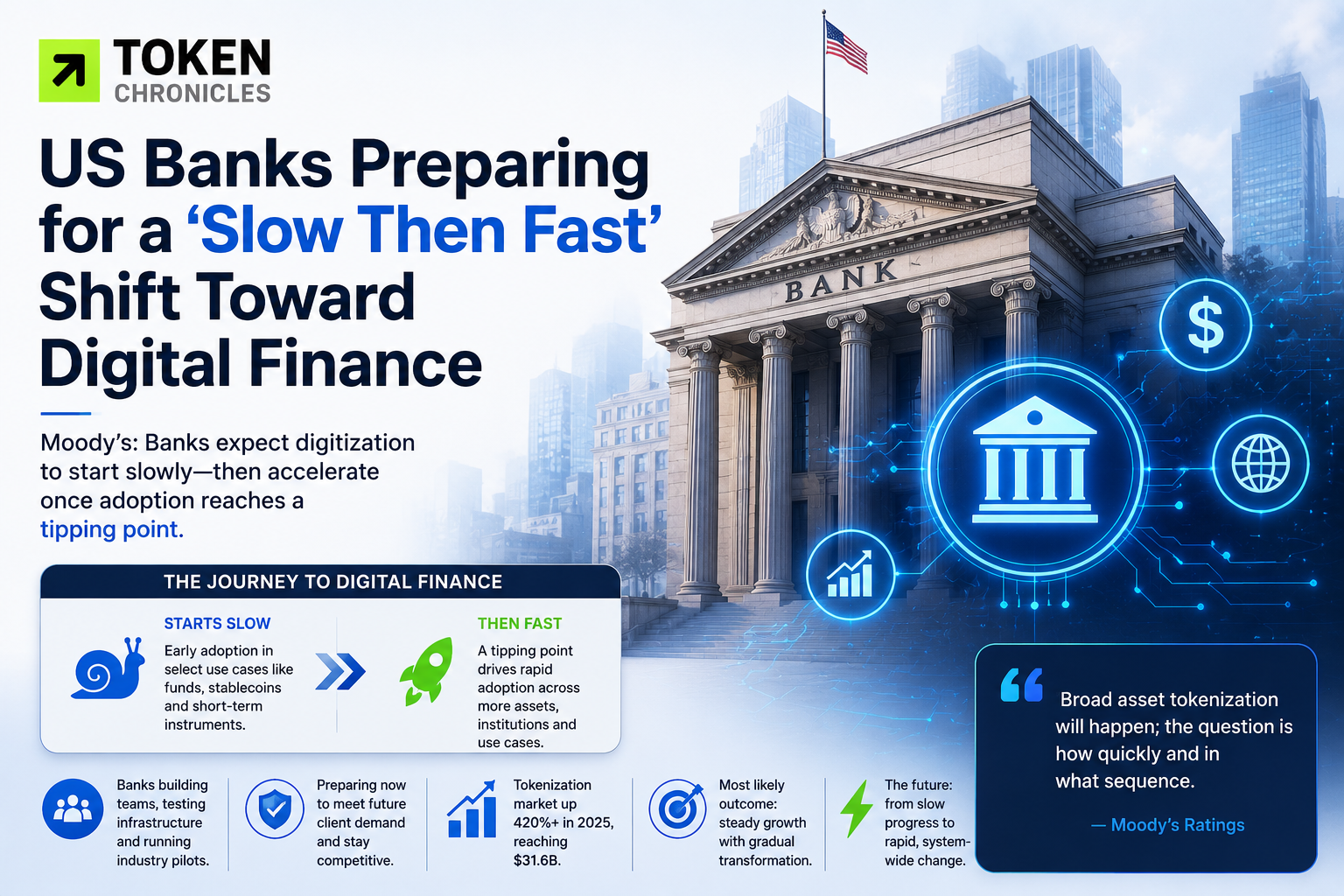
JPMorgan’s move reflects the growing push among major financial institutions toward blockchain-based tokenization, which many executives believe can improve settlement speed, operational efficiency, and market accessibility compared to traditional financial systems.
According to data from RWA.xyz, more than $32 billion worth of real-world assets — excluding stablecoins — are currently tokenized on blockchain networks. These assets span multiple sectors, including government bonds, equities, commodities, and real estate.
Bloomberg ETF analyst Eric Balchunas described JLTXX as particularly notable because its 0.16% fee is relatively low for a money market product maintaining a stable asset value.
JPMorgan Continues Expanding Blockchain Initiatives
The new filing follows JPMorgan’s earlier blockchain investment product, the My OnChain Net Yield Fund (MONY), which launched in December on Ethereum. MONY focuses on short-term debt instruments designed to provide returns above standard bank deposit rates, with interest accumulating daily.
The announcement also arrives shortly after JPMorgan participated in a pilot transaction involving the transfer of a tokenized US Treasury fund across the XRP Ledger and traditional banking rails into a Singapore-based JPMorgan account within seconds.
Meanwhile, other major financial institutions are pursuing similar strategies. In April, Morgan Stanley introduced its own stablecoin reserve product, the Stablecoin Reserves Portfolio, allowing issuers to store reserve assets inside institutional money market funds while earning interest.
IMF Warns of Risks Around Tokenization
Despite rising institutional interest, tokenization continues to face scrutiny from regulators and global financial organizations.
In an April report, the International Monetary Fund (IMF) warned that tokenized financial systems could shift risk away from traditional banks and into shared blockchain infrastructure and smart contract systems, potentially complicating intervention during periods of financial stress.
The IMF also cautioned that unresolved legal questions surrounding ownership records and settlement finality could leave tokenized financial markets fragmented unless clearer regulatory frameworks are established.
Several industry figures, including entrepreneur and “Shark Tank” investor Kevin O’Leary, have argued that broader crypto market structure legislation — including measures like the proposed CLARITY Act — will be necessary to provide legal certainty and support the long-term growth of tokenized finance.