

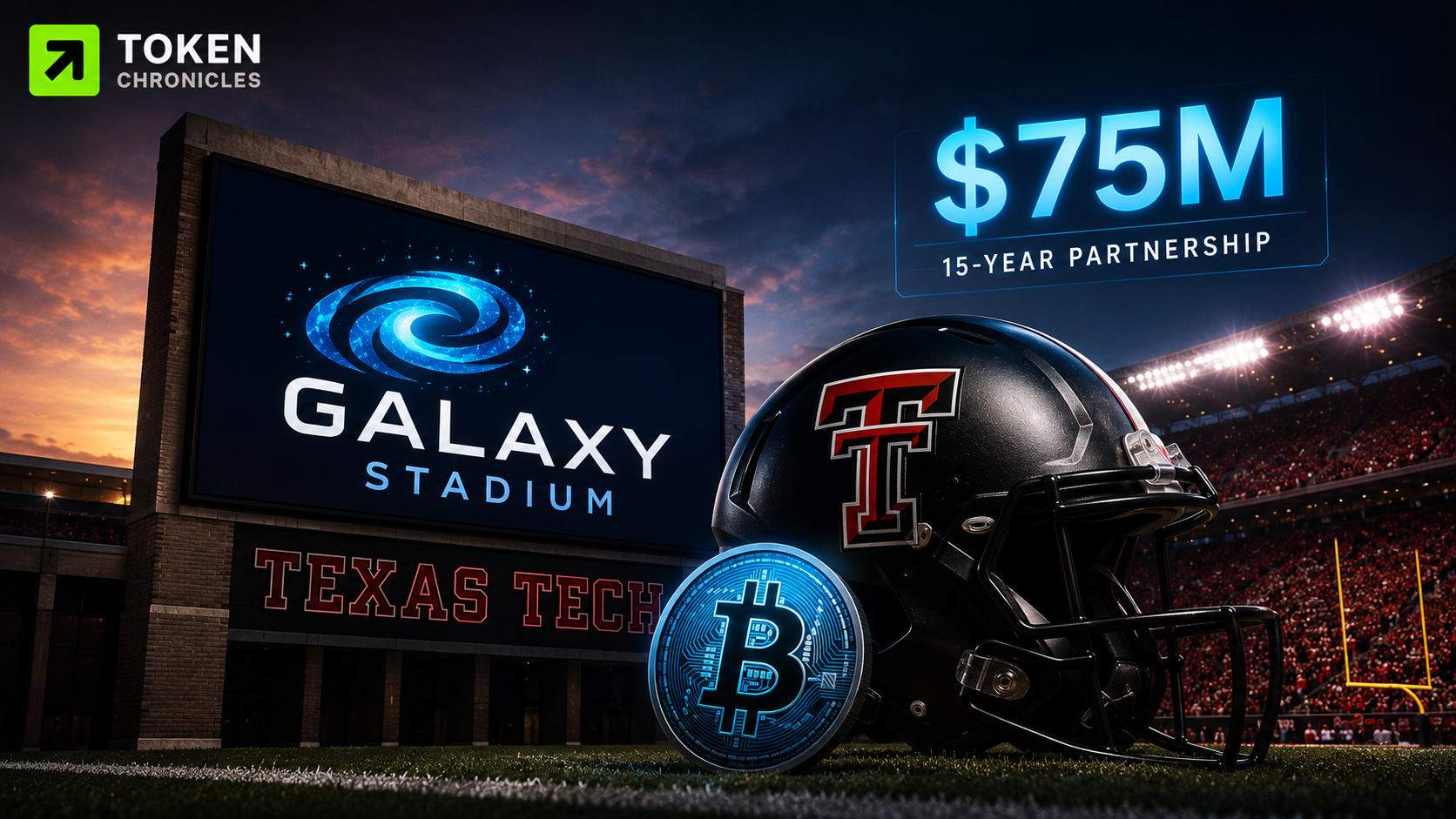
Galaxy Digital is making one of crypto’s biggest long-term branding bets, committing $75 million to a 15-year naming-rights partnership with Texas Tech University that will reportedly transform Jones AT&T Stadium into Galaxy Stadium beginning with the 2026 college football season.
Led by billionaire investor Mike Novogratz, Galaxy will also become Texas Tech’s official digital assets and data center partner, expanding the relationship beyond traditional sports sponsorship into technology, infrastructure, and potential educational collaboration.
The agreement represents a significant shift in how crypto companies are approaching mainstream marketing. Rather than chasing short-term visibility, Galaxy is making a long-duration bet on integrating its brand into an established American institution and one of college football’s passionate communities.
More than a stadium naming deal
The partnership goes beyond placing Galaxy’s name on a football stadium.
As Texas Tech’s digital asset and data center partner, Galaxy could potentially collaborate with the university across areas such as blockchain research, digital asset education, computing infrastructure, and emerging technologies.
This broader technology component distinguishes the agreement from many previous crypto sports sponsorships, which were primarily focused on advertising and brand exposure.
For Galaxy, the university environment also creates an opportunity to build recognition among students, researchers, businesses, alumni, and sports fans while strengthening its presence in Texas, an increasingly important hub for digital infrastructure and cryptocurrency operations.
A different strategy from crypto’s previous sponsorship boom
Crypto companies have spent heavily on sports marketing before, but the results have been mixed.
During the previous crypto boom, exchanges poured billions into stadium naming rights, celebrity campaigns, Formula One partnerships, and professional sports sponsorships. Some of those agreements later became symbols of the industry’s excesses when companies collapsed or dramatically reduced marketing spending.
Galaxy’s strategy appears different.
The company operates across institutional trading, asset management, investment banking, digital asset infrastructure, and data centers. Its Texas Tech agreement therefore connects its branding with business areas extending beyond retail cryptocurrency trading.
The 15-year duration also suggests Galaxy is betting on long-term institutional adoption rather than a temporary crypto market cycle.
Crypto branding moves deeper into mainstream culture
College football offers something financial advertising cannot easily replicate: deeply rooted community engagement.
Texas Tech has tens of thousands of students and a large alumni and fan network. Having Galaxy’s name attached to the stadium could expose the brand repeatedly to audiences that may have little direct interaction with cryptocurrency markets.
Instead of asking consumers to immediately buy crypto, the strategy builds something potentially more valuable over time: familiarity.
If digital assets continue integrating with traditional finance, payments, tokenization, and institutional infrastructure, Galaxy Stadium could eventually feel no more unusual than arenas and stadiums named after banks, airlines, or telecommunications companies.
The deal reflects crypto’s institutional evolution
The partnership arrives as the digital asset industry increasingly moves beyond speculative trading.
Major financial institutions are exploring tokenized securities, stablecoins, blockchain-based settlement, digital asset custody, and real-world asset tokenization.
Galaxy has positioned itself within this institutional transition, offering financial and infrastructure services designed to connect traditional capital markets with the digital asset economy.
Its Texas Tech partnership effectively takes that institutional strategy into mainstream American culture.
Rather than keeping crypto confined to trading screens and financial centers, Galaxy is placing its brand directly into college sports.
A $75M long-term bet comes with risks
The scale and duration of the agreement also create significant risks.
Crypto remains exposed to regulatory uncertainty, extreme market cycles, technological disruption, and rapidly changing public sentiment. A 15-year commitment means Galaxy must maintain its financial strength and reputation through multiple market cycles.
The collapse of FTX demonstrated how quickly high-profile crypto sponsorships can become liabilities when the underlying company encounters trouble.
Galaxy’s challenge will therefore be proving that its partnership represents something more durable than another bull-market marketing campaign.
Why It Matters
Galaxy’s $75 million Texas Tech deal represents a broader experiment in how cryptocurrency companies build mainstream credibility.
Previous crypto marketing strategies often prioritized immediate attention. Galaxy appears to be pursuing something slower: institutional permanence and cultural familiarity.
A 15-year stadium agreement is effectively a wager that digital assets will become deeply embedded in mainstream finance and technology.
If that transition continues, Galaxy Stadium could symbolize crypto’s evolution from an emerging speculative industry into an established part of the financial and technological landscape.
The biggest question is no longer whether crypto companies can buy mainstream visibility. It is whether they can remain trusted and relevant long enough to turn that visibility into lasting institutional credibility.