


Ethereum’s long-standing model for supporting core protocol development may be approaching a difficult turning point.
According to former Ethereum Foundation contributor Trenton Van Epps, the ecosystem could face a significant funding shortfall in the coming months as existing financial support programs wind down and the Foundation adopts a more conservative treasury strategy.
Concerns Over Core Development Funding
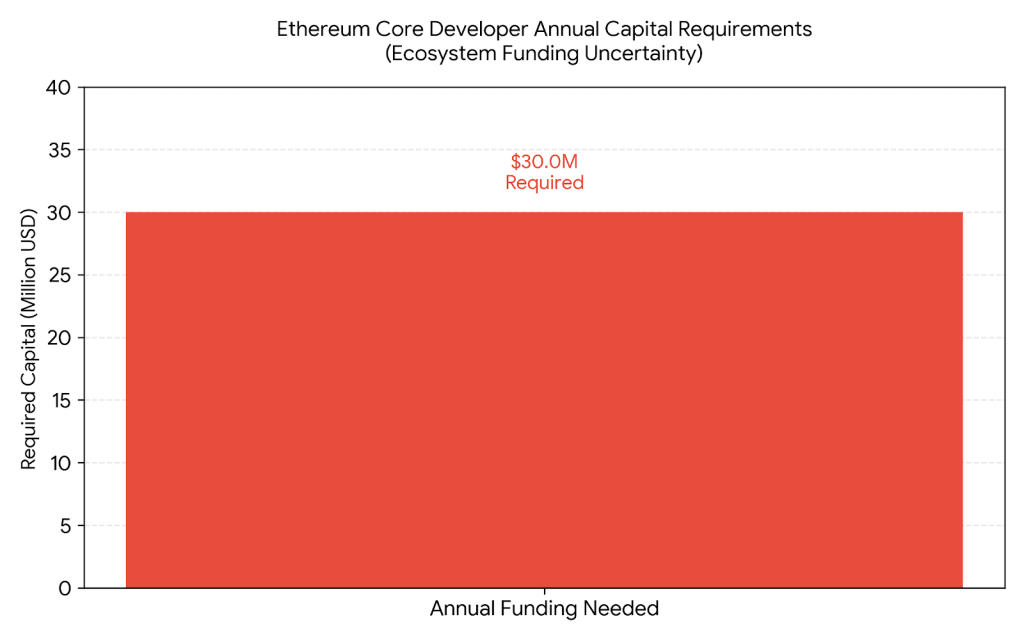
Van Epps believes Ethereum’s developer ecosystem now requires approximately $30 million annually to sustain the teams responsible for maintaining clients, improving infrastructure, and advancing protocol upgrades.
The concern comes after the expiration of Ethereum’s Client Incentive Program earlier this year and a broader reduction in spending by the Ethereum Foundation.
Without alternative funding mechanisms, the network may face what Van Epps describes as a gradual but meaningful funding challenge that could become increasingly visible over the next several months.
Leadership Changes Add to the Uncertainty
The warning also arrives during a period of organizational transition.
Several prominent members have departed the Ethereum Foundation this year, including co-executive director Hsiao-Wei Wang, who recently announced she would step away from her leadership role.
The wave of departures has fueled discussions within the Ethereum community about how the ecosystem should finance long-term development while preserving its decentralized nature.
Ethereum Foundation Prioritizes Longevity
Ethereum co-founder Vitalik Buterin has previously acknowledged that the Foundation’s resources are limited compared to the size of the broader Ethereum ecosystem.
According to Buterin, the organization was originally designed to support Ethereum through its foundational stages and major roadmap milestones, many of which have already been completed.
As a result, the Foundation is now focusing more heavily on long-term sustainability rather than expanding its spending commitments.
This strategy includes reducing ETH sales and managing treasury resources more conservatively to ensure the organization remains financially resilient for years to come.
Treasury Strategy Continues to Evolve
In recent months, the Ethereum Foundation has adjusted how it manages its holdings.
The organization has reduced some of its staking positions while exploring ways to generate sustainable funding for ecosystem development. It has also updated its treasury policies to increase staking participation over time, aiming to support protocol development while limiting future token sales.
The shift reflects a broader challenge facing Ethereum: balancing long-term financial sustainability with the growing needs of a global, decentralized developer community.
A Critical Phase for Ethereum
Ethereum remains the largest smart contract ecosystem in the world, powering decentralized finance, tokenization, stablecoins, and thousands of applications.
However, as the network matures, questions around governance and funding are becoming increasingly important.
The coming months may determine whether Ethereum can establish new funding models that support innovation while maintaining the decentralized principles that have defined the network since its inception.
For many observers, the issue is no longer about Ethereum’s technology—it is about ensuring the people building that technology have the resources to continue doing so.


