


For years, decentralized finance (DeFi) token prices have largely followed the broader crypto market, rising and falling alongside Bitcoin and Ethereum. However, new research suggests that protocol-specific fundamentals are becoming increasingly important in determining long-term valuations.
An updated analysis examining DeFi performance through March 2026 indicates that while overall market conditions remain the primary driver of prices, metrics such as Total Value Locked (TVL), revenue growth, and token supply dynamics are playing a growing role in how investors value DeFi projects.
Fundamentals Continue to Add Predictive Value
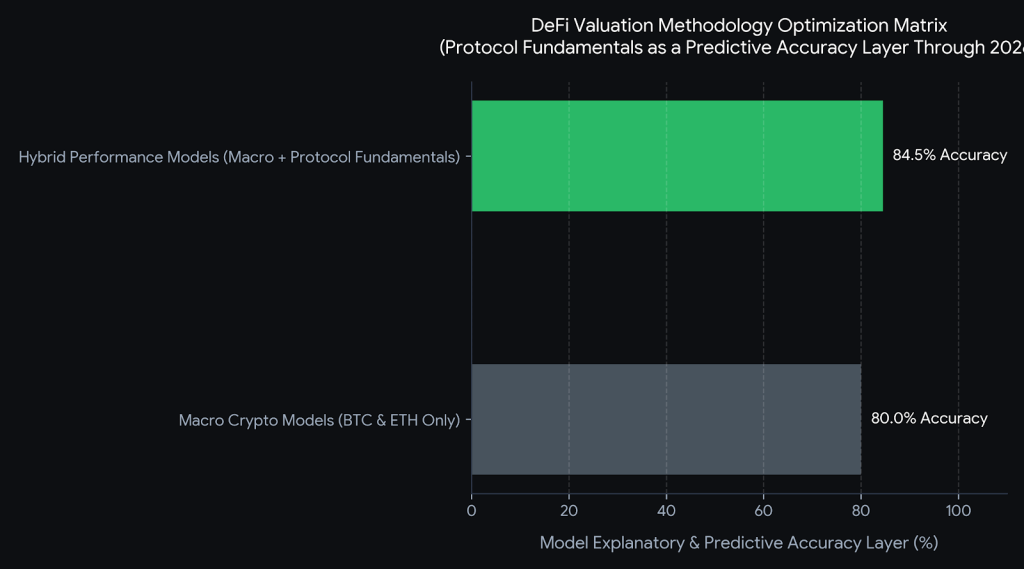
The study found that combining traditional market indicators with protocol fundamentals consistently improves the ability to explain DeFi token performance over a six-month period.
Compared with models based solely on Bitcoin and Ethereum market movements, incorporating protocol-level metrics increases explanatory power by 3 to 5 percentage points, a trend that has remained remarkably consistent across different market environments.
Rather than replacing broader market trends, protocol fundamentals now act as an additional valuation layer that helps distinguish stronger projects from weaker ones.
Market Conditions Still Matter Most
The research emphasizes that Bitcoin and Ethereum continue to set the overall direction of the DeFi market.
While a brief period during the second half of 2024 suggested that fundamentals alone could outperform broader market signals, that advantage proved temporary.
By the second half of 2025, models relying exclusively on protocol fundamentals lost their edge, while models combining both market trends and project-specific data continued to perform consistently.
This suggests that investors still react primarily to macro crypto conditions before evaluating the health of individual protocols.
TVL Remains the Strongest Indicator
Among all on-chain metrics analyzed, Total Value Locked (TVL) remains the single most reliable measure of protocol strength.
TVL reflects the amount of capital committed to a decentralized finance platform and continues to serve as one of the clearest indicators of investor confidence and ecosystem activity.
Projects capable of maintaining or expanding TVL generally demonstrate stronger long-term valuation performance than those experiencing sustained capital outflows.
Revenue Is Becoming More Important Than Fees
Another notable trend emerging from the research is the growing importance of protocol revenue.
Historically, transaction fees were considered one of the primary indicators of network health. More recently, however, investors appear to be placing greater emphasis on how much revenue protocols actually retain rather than simply how much fee activity they generate.
Over recent observation periods, revenue has begun to slightly outperform fees as a valuation signal, suggesting that sustainable business models are becoming increasingly important as the DeFi sector matures.
Token Supply Could Become a Key Valuation Metric
The report also explored how changes in token supply influence long-term returns.
Using a smaller sample of DeFi projects that publish buyback and supply data, researchers found that reductions in circulating token supply may have a greater impact on valuations than token buyback programs alone.
Although the dataset remains limited, the findings suggest that supply management could become another important metric investors monitor alongside revenue and TVL.
Investors Are Looking Beyond Market Momentum
Since late 2023, valuation models have increasingly relied on protocol-specific performance instead of simply tracking Bitcoin, Ethereum, or broader sector trends.
This shift reflects a more mature investment environment where capital is beginning to differentiate between projects based on operational performance rather than treating the entire DeFi market as a single asset class.
As decentralized finance continues to evolve, investors appear increasingly focused on sustainable growth, efficient capital utilization, and long-term protocol economics.
Why It Matters
The latest findings indicate that DeFi valuations are gradually transitioning toward a more fundamentals-driven framework.
While Bitcoin and Ethereum remain the dominant forces influencing overall market sentiment, investors are paying closer attention to protocol health, capital efficiency, revenue generation, and token economics when assessing long-term value.
As institutional participation continues to grow and the DeFi ecosystem matures, projects with strong fundamentals may increasingly outperform those driven primarily by speculation, reinforcing the importance of sustainable business models in the next phase of decentralized finance.


