
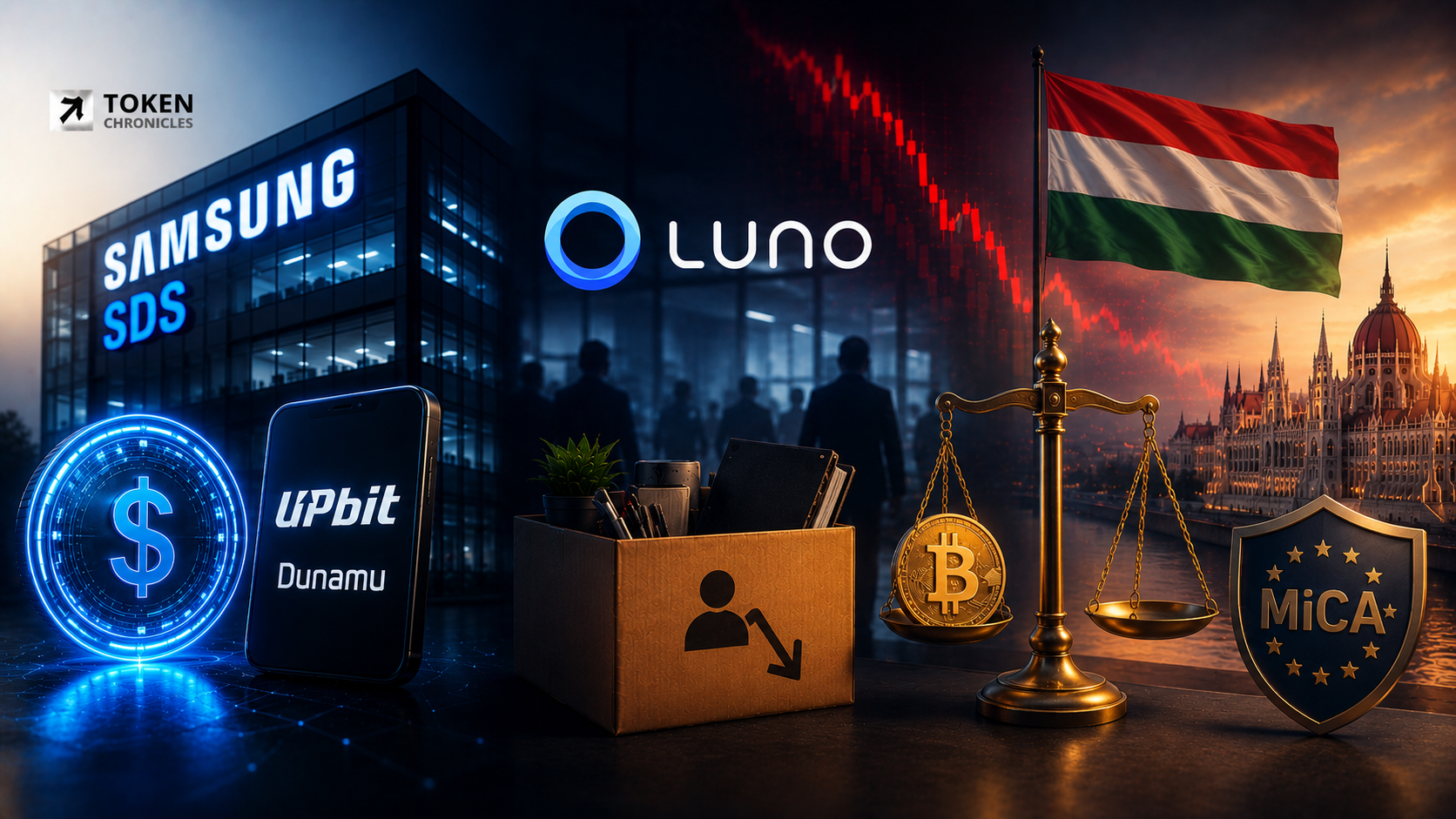
The crypto industry saw significant developments across digital payments, employment and regulation, with Samsung SDS exploring stablecoin and AI-powered payment infrastructure, Luno cutting 20% of its workforce and Hungary removing controversial transaction verification requirements.
Here are the major developments shaping crypto markets today.
Samsung SDS Explores Stablecoin and AI Payments With Dunamu
Samsung SDS, the IT services division of Samsung Group, is exploring stablecoin infrastructure, digital asset systems and AI-powered payment models with Dunamu, the operator of South Korean crypto exchange Upbit.
Samsung SDS CEO Lee Jun-hee disclosed the discussions during the company’s second-quarter earnings call, saying the companies are examining potential cooperation across digital financial infrastructure.
Samsung SDS has already developed capabilities in blockchain-based finance through its involvement with the Korea Securities Depository’s tokenized securities platform and testing of the complete stablecoin lifecycle, from issuance through settlement.
The company expects its relationship with Dunamu to strengthen its position in the emerging digital asset infrastructure market.
The development also comes shortly after Samsung Electronics revealed plans to introduce stablecoin support within Samsung Wallet, indicating a broader digital asset push across Samsung’s businesses.
Luno Cuts 20% of Workforce Amid Wider Crypto Restructuring
Crypto exchange Luno is reportedly reducing its global workforce by approximately 20% as it restructures operations and redirects resources toward institutional services, financial infrastructure and business-to-business products.
CEO James Lanigan said investments in automation and improvements in operational efficiency had changed the level of resources required to operate the business.
The company is also adjusting expenses to current market conditions while continuing to invest in areas including compliance, infrastructure and its retail platform.
The latest restructuring follows a significantly larger reduction in January 2023, when Luno eliminated approximately 35% of its workforce, affecting nearly 330 employees.
Luno, which is owned by Digital Currency Group, serves approximately 16 million users across Africa and the Asia-Pacific region and has increasingly expanded beyond retail crypto trading into institutional and infrastructure services.
Its latest cuts are part of a broader industry trend. At least 12 crypto and crypto-related companies reportedly announced layoffs or restructuring measures during July, with AI, automation, market conditions and operational efficiency increasingly cited as reasons for reducing headcount.
Hungary Removes Mandatory Crypto Transaction Checks
Hungary has meanwhile reversed one of its more restrictive cryptocurrency requirements by eliminating mandatory third-party validation for certain crypto conversions.
The Hungarian Parliament voted to repeal the country’s crypto validator requirement, which had imposed an additional approval process on some digital asset transactions.
The system required licensed validators to verify information such as wallet ownership, customer details and the origin of crypto assets before transactions could receive compliance clearance.
Finance Minister Kármán András acknowledged that the rules had disrupted the domestic cryptocurrency market and contributed to some service providers suspending operations.
The repeal removes this additional transaction-level requirement while Hungary’s broader crypto sector continues transitioning toward the European Union’s Markets in Crypto-Assets (MiCA) framework.
The regulatory shift coincides with CoinCash preparing to restore services after securing Hungary’s first MiCA authorization.
Crypto Industry Balances Expansion With Restructuring
The day’s developments illustrate three different forces reshaping the digital asset industry.
Samsung’s growing interest in stablecoins demonstrates how major technology companies are increasingly viewing blockchain as payment and financial infrastructure, particularly as AI creates demand for more programmable transaction systems.
Luno’s restructuring reflects the opposite side of that transition, as crypto companies use automation and tighter operating models to reduce costs and redirect resources toward higher-growth businesses.
Hungary’s regulatory reversal, meanwhile, shows governments continuing to adjust domestic crypto rules as broader frameworks such as MiCA take effect.
Together, these developments point toward a crypto market becoming more integrated with mainstream technology and financial infrastructure while simultaneously undergoing regulatory and operational consolidation.